Robotaxis Will Kill Uber, Not Chauffeurs: The Future of Premium Transport


Save $50 on Your First Ride with Cars On Demand.

Robotaxis Will Kill Uber & Taxis , Not Chauffeurs: The Future of Premium Transport
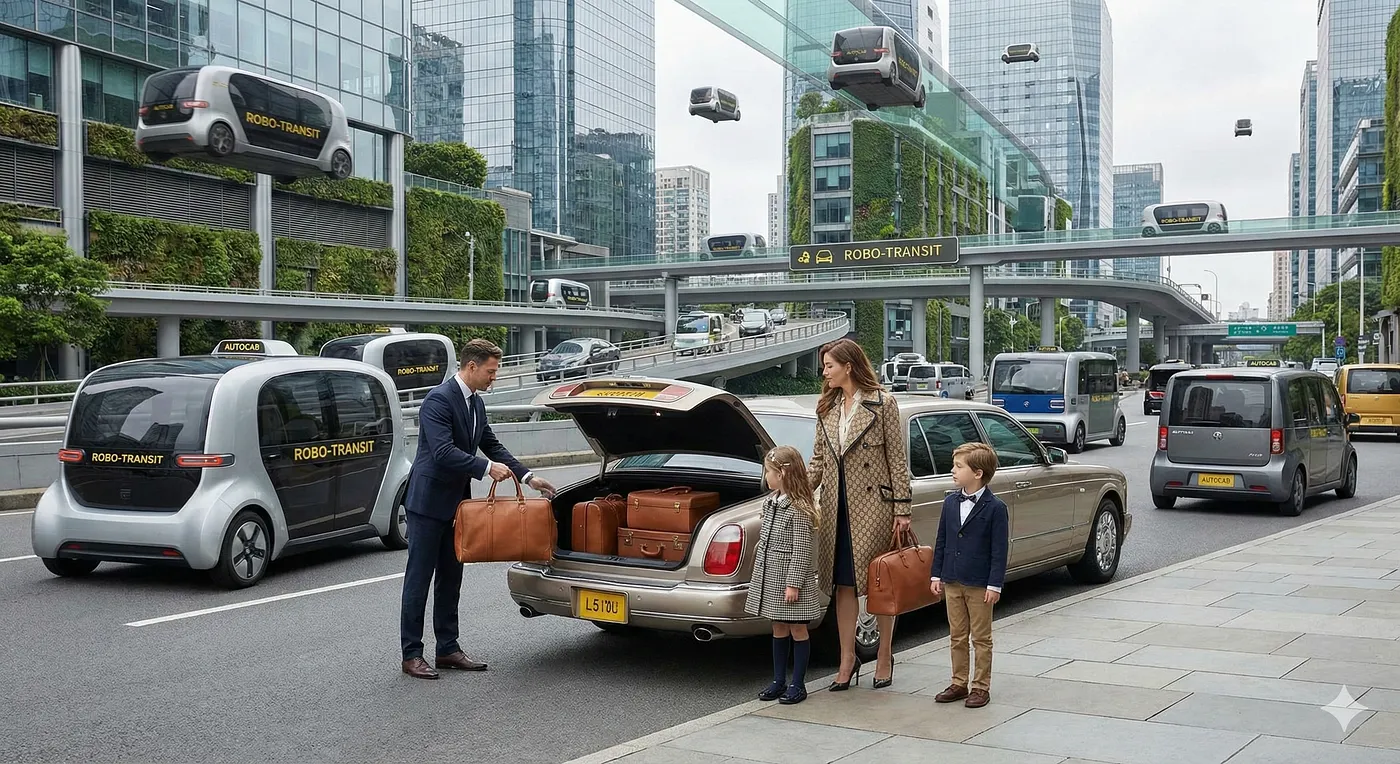
Not everyone wants to ride in a Robo Taxi
The Autonomous Revolution Is Here — And It Changes Everything
The self-driving car is no longer science fiction. As of 2025, Waymo operates commercial robotaxis in Phoenix, San Francisco, Los Angeles, and Austin, with over 100 million driverless miles accumulated. Their safety record demonstrates the technology works: 5 times fewer injury-involved crashes and 12 times fewer pedestrian injury crashes compared to human benchmarks.
Baidu’s Apollo Go serves multiple Chinese cities with over 6 million rides completed by 2025, delivering 2.2 million fully driverless rides in Q2 2025 alone. Tesla continues advancing its supervised Full Self-Driving system through billions of consumer miles, while startups like Zoox test purpose-built bidirectional vehicles in San Francisco and Las Vegas.
This isn’t incremental change. Within 5–10 years, autonomous fleets will dominate urban transportation in major cities worldwide. Traditional taxis and rideshare drivers will face the same fate as switchboard operators and travel agents — displaced by technology that performs their function more efficiently and cheaply.
But here’s what few understand: this transformation will destroy the taxi and rideshare industry while strengthening premium chauffeur services. The reason comes down to what clients actually purchase when they book ground transportation.
Why Taxis and Rideshare Services Face Extinction
The Economics Are Brutal and Inescapable
Traditional taxi services and rideshare platforms like Uber depend fundamentally on human drivers. This creates fixed costs that autonomous vehicles eliminate entirely:
Driver Compensation: In Australia, rideshare drivers earn approximately $20–30 per hour after platform commissions. A vehicle operating 12 hours daily incurs $240–360 in daily driver costs, or $87,600–131,400 annually.
Utilization Rates: Human drivers can’t operate 24/7. Vehicles sit idle during rest periods, reducing revenue-generating hours. Autonomous vehicles operate continuously with only maintenance downtime, potentially tripling utilization from 40% to near 100%.
Fleet Efficiency: When driver costs disappear, robotaxi operators can charge 50–70% less while maintaining higher margins. A $15 human-driven ride becomes a $5–7 autonomous ride with better unit economics.
The mathematics are devastating for human-driven services. Once autonomous fleets achieve reliability in urban environments, competing on price becomes impossible for traditional taxis and rideshare drivers.
Technology Commoditizes the Basic Transport Function
Rideshare platforms succeeded by commoditizing taxi services — making basic point-to-point transportation cheaper and more convenient through smartphone apps. But these platforms are themselves vulnerable to commoditization by autonomous technology.
What Rideshare Actually Provides:
- App-based booking and payment
- GPS tracking and routing
- Dynamic pricing matching supply and demand
- Basic vehicle cleanliness and service standards
What Autonomous Vehicles Replicate: All of it. Waymo’s robotaxis already provide app booking, real-time tracking, and consistent vehicle standards. The only difference is removing the driver — which is precisely the cost component that matters economically.
Uber understands this existential threat. That’s why they partnered with NVIDIA in October 2025 to deploy Level 4 autonomous fleets, aiming to integrate up to 100,000 robotaxis into their network by 2027. They’re racing to become autonomous fleet operators before autonomous fleet operators make them obsolete.
The Timeline Is Shorter Than Most Expect
Waymo’s safety data demonstrates the technology is ready: 57% fewer police-reported crashes and 85% fewer injury crashes than human drivers in comparable environments. Independent actuarial analysis by Swiss Re confirmed 92% fewer bodily injury claims and 88% fewer property damage claims across 25 million miles.
Regulatory frameworks are adapting globally. In the U.S., 35 states had passed autonomous vehicle statutes by 2024, with no outright bans. The UN Economic Commission for Europe adopted comprehensive Level 3 autonomy regulations in 2020, expanding them to 130 km/h operations by 2022.
The Australian Context: Cautious But Inevitable
While the US and China push ahead aggressively, Australian regulators — including transport authorities in NSW and Victoria — are taking a more cautious approach to autonomous vehicle deployment. This regulatory conservatism will delay robotaxi operations in Australian cities, but it won’t prevent them.
When autonomous vehicles do arrive on Australian roads, they will struggle with our unique infrastructure far longer than they have in purpose-built test cities like Phoenix, Arizona. Melbourne’s hook turns, Sydney’s complex tunnel networks, Brisbane’s legacy road systems, and our vast regional distances present challenges that gridded American cities don’t face.
However, this delay is temporary. Within a decade, robotaxis will operate in Sydney, Melbourne, Brisbane, and other major Australian cities. The economic pressure is too powerful, and the technology will adapt to our infrastructure eventually.
The question for Australian ground transportation providers isn’t whether autonomous vehicles will disrupt the market — it’s which business models will survive when they do.
Why Premium Chauffeur Services Will Thrive
What Robotaxis and Premium Services Actually Deliver
compare the pair
This comparison reveals why premium chauffeur services aren’t competing with autonomous vehicles — we’re serving fundamentally different markets with incompatible value propositions.
High-Touch Service Cannot Be Automated
The fundamental reason corporate chauffeur services will survive — and thrive — is that our clients aren’t purchasing transportation. They’re purchasing an experience that requires human expertise, judgment, and service excellence.
What Autonomous Vehicles Cannot Provide:
Personal Recognition and Relationship: Our drivers know regular clients by name, understand their preferences, and anticipate their needs. They remember which executives prefer quiet rides for phone calls versus conversation, which passengers need extra luggage assistance, and which clients require specific vehicle positioning for security or accessibility.
Adaptive Problem-Solving: When flights are delayed, weather creates hazardous conditions, or routes require last-minute changes due to events or closures, human drivers apply contextual judgment that algorithms cannot replicate. They make split-second decisions balancing safety, timing, and client comfort based on years of experience.
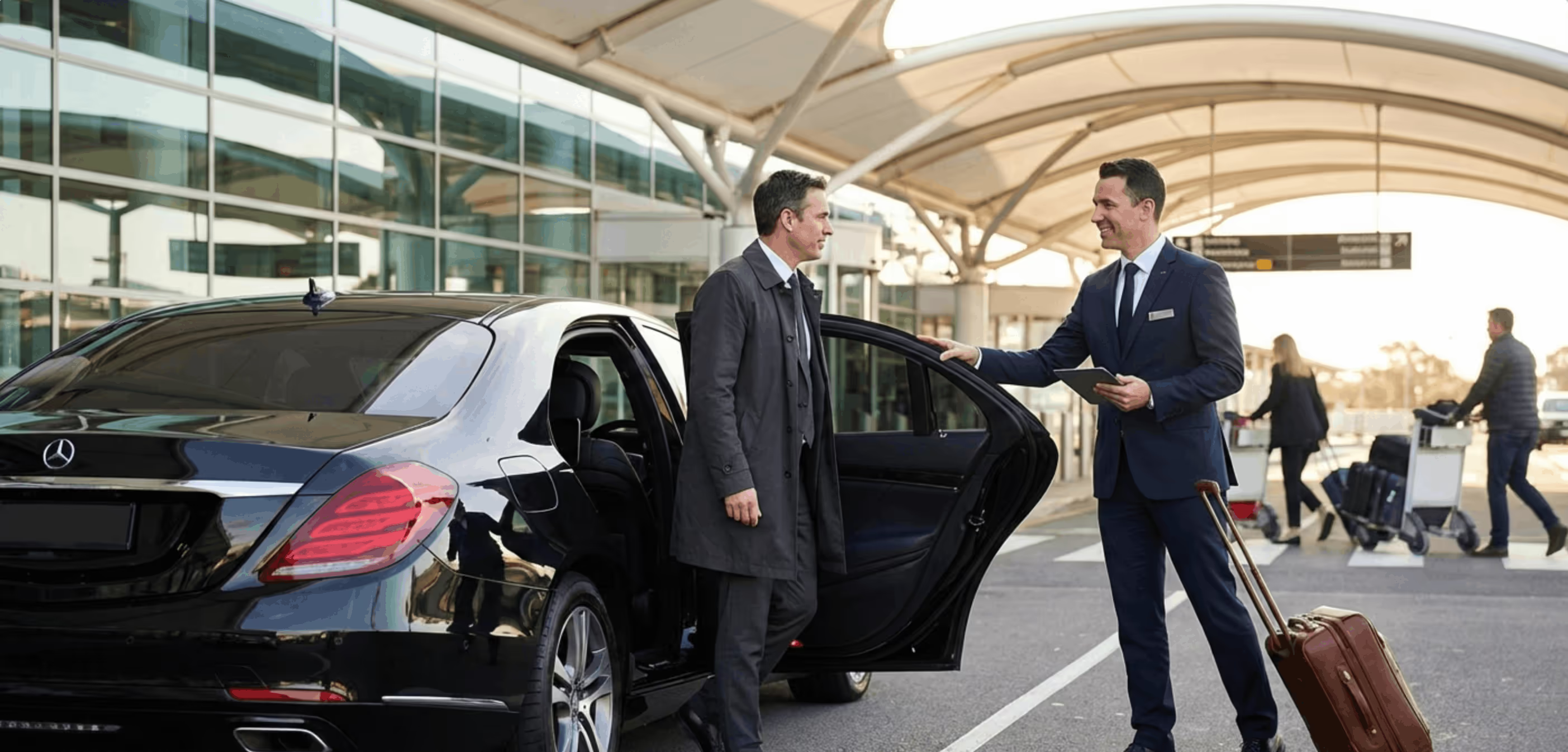
Concierge-Level Service: Premium chauffeur service extends beyond driving. Our professionals provide luggage assistance, navigate complex airport pickup procedures, coordinate with Executive Assistants on schedule changes, and handle unexpected situations with discretion and professionalism. These human interactions create value that autonomous vehicles fundamentally cannot deliver.
The Privacy Paradox: The “Fishbowl” Effect
There is a hidden cost to autonomous vehicles that few discuss: the loss of privacy.
To ensure passenger safety and prevent vandalism, robotaxis are equipped with internal cameras and microphones that record the cabin environment. Waymo’s vehicles include multiple interior cameras monitoring passengers throughout the journey, with footage stored on company servers for safety audits, incident investigation, and system training.
For a teenager heading to the mall, this is acceptable. For a C-suite executive discussing a sensitive merger, a celebrity requiring anonymity, or a lawyer handling a high-profile case, it is a dealbreaker.
Do you want to discuss a confidential acquisition, review sensitive HR matters, or strategize before an important negotiation in a vehicle where every word and expression is recorded for a tech giant’s database?
Cars on Demand offers the ultimate luxury: Privacy.
No Internal Surveillance: Your conversation remains yours. No cameras record your discussions, expressions, or activities during the journey.
Discretion: Our drivers are trained professionals who understand confidentiality. They know when to engage in conversation and when to provide silent, invisible service. Many have served the same executives for years, building relationships based on trust and discretion.
Data Security: We do not harvest your in-cabin behavior to train AI models, sell to advertisers, or store for algorithmic analysis. Your journey is your business, not our data product.
Legal Protections: Professional chauffeurs can be bound by non-disclosure agreements for particularly sensitive clients. Autonomous vehicles offer no such legal protection — their cameras record everything by design.
In an era of surveillance capitalism, where your every click, search, and location is tracked and monetized, the confidentiality of a private chauffeur is an asset that technology cannot replicate. When the stakes are high — billion-dollar deals, sensitive family matters, confidential medical appointments — privacy isn’t a luxury. It’s a requirement.
Security and Discretion for High-Profile Clients
Corporate executives, celebrities, government officials, and high-net-worth individuals require drivers who understand security protocols, recognize potential threats, and provide appropriate discretion.
Conversations that occur in vehicles often involve sensitive business matters, personal issues, or confidential information. Professional chauffeurs are trained to maintain confidentiality, understand client security requirements, and exercise discretion about client activities.
Autonomous vehicles offer no assurance of privacy or discretion. They’re surveillance platforms optimized for data collection. The cameras and microphones necessary for safety also create permanent records of everything that occurs in the vehicle.
The Premium Market Values Reliability and Accountability
When Executive Assistants book airport transfers for their CEOs, they’re not optimizing for the cheapest option. They’re ensuring their executive arrives on time, in the right frame of mind, in a vehicle that reflects company standards, with a driver who understands professional expectations.
The Premium Client Calculation:
Opportunity Cost: A CEO’s time is worth hundreds or thousands of dollars per hour. Missing a flight, arriving stressed, or dealing with transportation problems costs far more than any fare differential. Premium chauffeur services provide certainty that justifies higher pricing.
Brand Representation: When clients arrive at important meetings, investor presentations, or high-stakes negotiations, their ground transportation reflects on their company and personal brand. Arriving in a professionally chauffeured executive vehicle communicates different expectations than arriving in a robotaxi.
Service Guarantees: Our 99.99% on-time reliability record exists because professional drivers prioritize client schedules above all else. They monitor traffic proactively, communicate delays immediately, and solve problems in real-time. Autonomous vehicles optimize for algorithmic efficiency, not individual client priority.
Human Accountability: When things go wrong — and occasionally they do — human drivers take responsibility, adapt solutions, and ensure clients reach their destinations. Who holds an autonomous vehicle accountable when software fails? Corporate clients pay premium rates precisely to avoid these uncertainties.
Fleet Composition Reflects Service Differentiation
Premium chauffeur services operate fundamentally different vehicle fleets than mass-market transportation. Our clients expect:
- Luxury Sedans maintained to executive standards
- Premium Sedans offering superior comfort and presentation
- SUVs for families or passengers with substantial luggage
- 8-seater People Movers for group executive travel
These aren’t commodity vehicles. They’re carefully selected, professionally maintained, and presented immaculately. The interior environment — from climate control to entertainment systems to privacy features — reflects the premium positioning our clients expect.
Robotaxis optimize for cost efficiency and utilization. They’re designed for maximum passenger throughput with durable, easy-to-clean interiors that can handle high-volume, rapid turnover. The distinction matters to clients who value quality, presentation, and service excellence.
Geographic and Operational Scope
Autonomous vehicles excel in geo-fenced urban environments with comprehensive mapping and predictable traffic patterns. They struggle — and will continue struggling for years — with:
Regional and Interstate Transfers: Long-distance travel to destinations outside mapped areas, across state borders, or into rural regions where infrastructure and traffic patterns don’t support autonomous operation.
Complex Airport Operations: Navigating airport pickup procedures, coordinating with flight crews for private aviation, handling VIP arrivals requiring discretion, or managing multiple stops for passenger connections.
Event-Based Transportation: Corporate events, conferences, weddings, and special occasions require flexible, responsive service that adapts to changing schedules and client needs in real-time.
Weather Adaptation: Severe weather, natural disasters, or hazardous conditions require human judgment about route safety, timing, and client protection that autonomous systems don’t reliably provide.
Our Sydney airport transfers, Melbourne airport transfers, and nationwide services cover the complete spectrum of client needs, not just the profitable urban segments autonomous fleets will target.
The Coming Market Bifurcation
Two Distinct Transportation Markets Will Emerge
Within the next decade, ground transportation will split into clearly defined segments:
Commoditized Mass Market:
- Point-to-point urban transportation
- Standardized routes and destinations
- Price-sensitive consumers
- High-volume, low-margin business model
- Dominated by autonomous robotaxis
- Surveillance-based privacy model
Premium Service Market:
- Complex, customized transportation needs
- High-touch service and personal relationships
- Privacy, quality, and reliability-focused clients
- Lower-volume, high-margin business model
- Served exclusively by professional chauffeur services
- Discretion-based privacy guarantee
This bifurcation is already visible. Waymo targets urban riders seeking cheap, convenient transport. Cars on Demand serves corporate clients, Executive Assistants, and premium travelers requiring professional service excellence.
Why Premium Services Command Market Power
As autonomous vehicles decimate the middle market — traditional taxis and basic rideshare — premium chauffeur services will actually strengthen their position:
Reduced Competition: Traditional taxi and rideshare drivers who provided semi-premium service at mid-market pricing will disappear, eliminating competitive pressure from below.
Clearer Value Proposition: When the choice becomes “robotaxi or professional chauffeur,” clients who value service quality, privacy, and human expertise will choose premium options without mid-tier alternatives muddying the decision.
Enhanced Differentiation: The contrast between autonomous vehicles and professional chauffeur services will become more stark, making the premium value easier to communicate and justify.
Privacy as Premium Feature: As surveillance becomes standard in autonomous vehicles, privacy becomes a differentiating feature that premium services can provide and defend.
Pricing Power: With commodity alternatives at $5–7 per ride and premium services at $150–400 for airport transfers, the value gap reflects genuine service differentiation rather than competition within similar service tiers.
Corporate Travel Management Drives Demand
The corporate travel sector — representing billions in annual ground transportation spending — will increasingly bifurcate between autonomous options for standard employee travel and premium chauffeur services for executive and VIP transportation.
Executive Assistants will continue booking professional chauffeur services because:
- Their executives’ time and schedules are too valuable to risk on algorithmic optimization
- Privacy requirements prevent discussing confidential matters in surveilled robotaxis
- Company brand representation matters in client-facing situations
- Accountability and service guarantees protect EA reputations
- Human drivers provide flexibility that autonomous systems cannot match
Over 5,000 Executive Assistants across Australia already trust Cars on Demand for exactly these reasons. That number will grow as autonomous vehicles eliminate unreliable mid-tier options, forcing EAs to choose between commodity robotaxis and premium professional services.
Technology Limitations Autonomous Vehicles Cannot Overcome
The “Long Tail” Problem
Autonomous vehicles excel in common scenarios that occur millions of times: highway driving, standard intersections, routine traffic patterns. They struggle with rare events that humans handle intuitively:
- Construction zones with ambiguous signage
- Hand signals from police officers or construction workers
- Debris or obstacles in unexpected locations
- Aggressive or erratic behavior from other drivers
- Emergency vehicles requiring unusual yielding
- Parking situations requiring negotiation with attendants or security
These “edge cases” comprise less than 1% of driving scenarios but account for disproportionate risk. NHTSA investigations have identified persistent failures in handling occluded objects, low-visibility conditions, and rare event responses.
Premium chauffeur services serve clients who cannot tolerate edge-case failures. When transporting a CEO to a critical board meeting or an executive to an investor presentation, “99% reliability” isn’t acceptable. Our 99.99% standard exists because professional drivers handle the full spectrum of driving challenges, not just the statistically common ones.
Ethical Decision-Making and Liability
Autonomous vehicles face unresolved ethical dilemmas in unavoidable accident scenarios. These aren’t theoretical questions. The 2018 Uber autonomous vehicle fatality in Tempe, Arizona, and the 2023 Cruise incident where a robotaxi dragged a pedestrian 20 feet demonstrate real consequences of algorithmic decision-making failures.
Human drivers make ethical judgments constantly, balancing safety considerations with practical realities. Professional chauffeurs prioritize client safety while demonstrating appropriate care for other road users — a nuanced calculus that algorithms struggle to replicate.
Service Customization and Client Relationships
Autonomous vehicles optimize for standardization. Every ride follows algorithmic protocols: routing, speed, climate control. This standardization creates consistency but eliminates customization.
Premium clients expect — and pay for — customization:
- Specific route preferences based on experience or urgency
- Vehicle temperature and environment adjusted to personal preferences
- Flexible scheduling and route modifications
- Discreet handling of phone calls or conversations
- Assistance with luggage, packages, or special items
- Coordination with office staff or family members
These customizations require human memory, judgment, and relationship-building. They’re not features autonomous vehicles can “add” — they’re inherent to human service delivery.
The Professional Chauffeur Advantage
Experience, Training, and Judgment
Cars on Demand employs professional drivers, not gig economy contractors. Our chauffeurs average years of experience, comprehensive training, and deep local knowledge:
Route Expertise: Professional drivers know which routes work best at different times of day, how weather affects traffic patterns, where construction creates delays, and when alternative routes save time.
Airport Mastery: Our drivers navigate complex airport pickup procedures, understand airline-specific arrivals processes, coordinate with flight crews for private aviation, and handle VIP arrival protocols seamlessly.
Problem-Solving: When unexpected situations arise — road closures, accidents, weather emergencies, or client schedule changes — professional drivers adapt solutions immediately based on experience and judgment.
Communication: Professional chauffeurs coordinate with Executive Assistants, communicate proactively about delays or issues, and maintain discretion about client activities and conversations.
These competencies develop over years of professional practice. They cannot be replicated by autonomous systems optimized for algorithmic efficiency.
The Technology We Deploy Enhances Drivers, Not Replaces Them
Our RideMinder platform represents technology designed to empower professional drivers rather than eliminate them:
Real-Time Flight Tracking: Automatic monitoring and pickup adjustment for delayed flights
Route Optimization: Traffic data informing driver decisions, not replacing driver judgment
Client Communication: Automated SMS confirmations and tracking links
Dispatch Coordination: Efficient assignment and backup driver deployment
This technology makes professional drivers more effective, more reliable, and more valuable to clients. It’s fundamentally different from autonomous technology designed to eliminate human drivers entirely.
Service Standards That Matter to Premium Clients
Our service standards reflect what premium clients actually value:
Reliability: 99.99% on-time performance across millions of rides
Professionalism: Drivers in business attire who understand executive expectations
Discretion: Confidentiality and appropriate privacy for sensitive situations
Presentation: Immaculately maintained vehicles reflecting premium positioning
Accountability: Clear service guarantees and 24/7 support
These aren’t marketing claims — they’re operational commitments that professional employment enables. Autonomous fleets optimize for different metrics: cost per mile, utilization rates, algorithmic efficiency. The distinction matters to clients who value service over price.
Looking Forward: The Next Decade of Ground Transportation
What Will Happen to Taxis and Rideshare
Within 5–10 years, autonomous vehicles will dominate urban transportation in major cities for standard point-to-point trips. Uber and Lyft will transition from driver platforms to autonomous fleet operators. Traditional taxi services will collapse in cities with autonomous alternatives.
Rideshare drivers and taxi operators will exit the industry in large numbers, unable to compete on price or convenience. The mass-market ground transportation industry will fundamentally restructure around autonomous technology.
This isn’t speculation — it’s the logical endpoint of current deployment trajectories and economic realities.
What Will Happen to Premium Chauffeur Services
Premium services will strengthen differentiation as autonomous vehicles proliferate, making the distinction between commodity transportation and professional service clearer to corporate clients.
Corporate travel managers will increasingly bifurcate ground transportation budgets: autonomous options for standard employee travel, premium chauffeur services for executives and VIP situations requiring privacy, discretion, and high-touch service.
Professional chauffeur services will expand market share among quality-focused clients as autonomous vehicles prove unable to replicate human judgment, service customization, or guaranteed privacy. Professional drivers will become more valued, not less, as their distinctive capabilities become obvious.
Why Cars on Demand Is Positioned for This Future
We’ve spent 35 years building the operational excellence, technology platforms, and client relationships that will matter in an autonomous future:
Professional Employment Model: Our drivers are career professionals, not gig contractors. This employment structure creates service consistency, institutional knowledge, and client relationships autonomous fleets cannot replicate.
Privacy Guarantee: We don’t record, surveil, or monetize client activities. Your journey remains confidential, protected by professional discretion rather than exposed to corporate surveillance.
Service Standards Above Technology: We invest in technology that enhances driver effectiveness while maintaining human judgment and service as core differentiators.
Corporate Client Focus: Our 5,000+ Executive Assistant relationships reflect deep understanding of corporate travel requirements, privacy needs, and accountability that premium clients demand.
Nationwide Service Coverage: Our Brisbane airport transfers, Perth airport transfers, Adelaide airport transfers, and services across all Australian cities provide comprehensive coverage autonomous fleets won’t match for years.
Premium Positioning: We’ve never competed on price with taxis or rideshare. We compete on service excellence, reliability, privacy, and professionalism — attributes that matter more, not less, as autonomous vehicles commoditize basic transportation.
The Bottom Line: Service Excellence Survives Automation
The autonomous vehicle revolution will transform ground transportation more dramatically than any technology since the automobile itself. Within a decade, driverless cars will dominate urban transportation for commodity trips, devastating traditional taxi services and rideshare platforms.
But this transformation will strengthen, not threaten, premium chauffeur services. Our clients don’t purchase transportation — they purchase expertise, privacy, reliability, service excellence, and human judgment. These attributes cannot be automated, algorithmically replicated, or delivered by vehicles optimized for cost efficiency and equipped with surveillance cameras.
The future belongs to two distinct markets: autonomous robotaxis serving price-sensitive commodity transportation in a surveilled environment, and professional chauffeur services serving clients who value quality, reliability, privacy, and high-touch service. The middle ground will disappear. The premium segment will thrive.
For corporate clients and Executive Assistants: The coming transformation makes your provider selection more important, not less. Choose partners with professional drivers, guaranteed privacy, proven service standards, and commitment to excellence that will matter when autonomous alternatives proliferate.
Register for corporate account or call 1300 638 258.
Because when autonomous vehicles eliminate basic transportation services, professional chauffeur excellence — and genuine privacy — become more valuable than ever.
.avif)
Get a quote in 8 seconds