Stronger Together: Why the Chauffeur Industry Keeps Reinventing the Same Broken Wheel



Save $50 on Your First Ride with Cars On Demand.

An opinion piece by Simon Kalipciyan, Co-Founder & COO, Cars on Demand
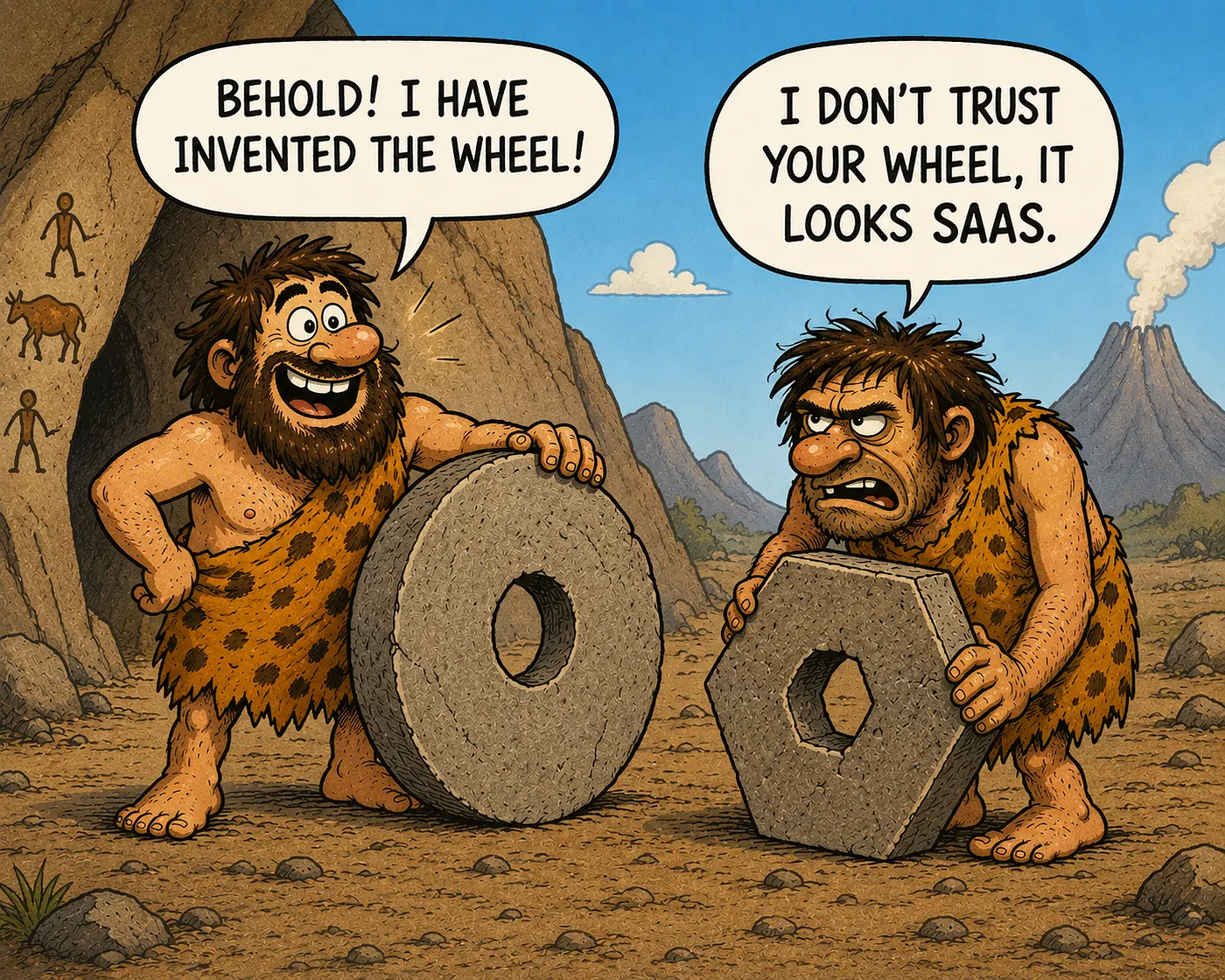
There is a strange instinct in the chauffeur and limousine industry. Every operator, no matter how small, eventually decides they need to “build their own tech.” A custom dispatch system. A bespoke booking engine. A driver app made by their nephew’s mate who knows a bit of code. And every time, the result is the same. Mediocre software, missed jobs, frustrated clients, drivers who cannot get the system to work, and a few years later, a quiet decision to start again from scratch.
I have watched this play out for thirty-five years. I have also done my share of building. Cars on Demand created our own technology, called LimoTech, because in the early days nobody else had what we needed. Eventually, we made a deliberate choice. We sold that technology to RideMinder, who turned it into a proper SaaS platform purpose-built for our industry. We then became RideMinder’s customer. Today, RideMinder is the engine room behind our 1,500 drivers running Sydney airport transfers, Melbourne airport transfers, Brisbane airport transfers, Perth airport transfers, Adelaide airport transfers, Canberra airport transfers, Darwin airport transfers, Gold Coast airport transfers, Sunshine Coast transfers, and Cairns transfers, and the reason we hold a 99.99% on-time record.
I am not writing this to sell RideMinder. I am writing it because the industry is making the same mistake on repeat, and there is a much better way to do this. Other industries figured it out a long time ago. We just have not caught up.
What Amazon worked out, and what we should learn from it
Most people think of Amazon Web Services as some genius master plan. It was not. AWS started because Amazon’s own engineering teams were spending 70% of their time building basic infrastructure like storage and computing systems instead of building actual customer-facing features. Jeff Bezos and his team called this “undifferentiated heavy lifting”, the work that produces what they bluntly called “muck.”
So they built a shared layer of infrastructure that all their internal teams could use. Once it worked for Amazon, they realised something obvious in hindsight. Every other business on the internet was wasting the same 70% of its engineering time on the same muck. As Bezos later said at a conference, “A business miracle happened. This is the greatest piece of business luck in the history of business so far as I know.”
Today AWS powers a huge slice of the modern internet, and Amazon’s competitors who tried to build their own cloud quietly use it too. The lesson is simple. Specialists who focus on one thing will always beat generalists who try to do everything in-house. This is exactly why we made the decision to lean into purpose-built ground transport technology rather than keep maintaining our own.
The Airbus and Rolls-Royce rule
Here is a question worth asking. When was the last time you heard Airbus say, “Rolls-Royce engines are rubbish, let’s just build our own”?
Never. Because Airbus understands the rule. The global aircraft engine market is dominated by just four companies: Rolls-Royce, Pratt & Whitney, CFM International and General Electric, who together make up 99% of the global aero engine market. Airbus and Boeing build incredible airframes. They do not build engines. They buy them from the people who have spent a century perfecting them.
Why? Because as one industry veteran put it bluntly, aircraft engines are too specialised for even the largest aircraft company to take on efficiently. Building them in-house would increase financial risk, increase technical risk, and you would have limited ability to sell them to anyone else. It would cost billions to develop your own engine, with no guarantee you would match what already exists.
Now imagine if Airbus said tomorrow, “We are pulling out of our Rolls-Royce contract. Our cousin’s friend has a workshop in Toulouse and reckons he can build a turbofan.” That is essentially what every chauffeur company is doing when they decide to build their own dispatch software instead of using one built by a team of engineers who do this and only this.
How banks figured it out: Visa and Mastercard
In the 1960s, banks across the United States were each trying to issue their own credit cards. It was chaos. A merchant would have to sign separate agreements with every bank, and a cardholder could only use their card at certain places. Then something interesting happened. Bank of America launched BankAmericard, and rather than keep it for themselves, by 1970 they gave up direct control and formed a cooperative with the other issuer banks. It was renamed Visa in 1976.
Mastercard took the same path. It was created by an alliance of several banks and regional bankcard associations in response to BankAmericard, and prior to its IPO in 2006, it was a cooperative owned by more than 25,000 financial institutions.
Notice what happened here. Banks competed fiercely on customer service, interest rates, branches, rewards, and brand. But they shared the rails. They figured out that you cannot have every single bank building its own global payment network. So they pooled resources, built shared infrastructure, and let the rails specialists become so good that today Visa and Mastercard connect millions of merchants, financial institutions, and consumers worldwide.
The banks still compete. Hard. But they are not wasting energy reinventing what does not need reinventing.
The travel industry got there too: Sabre and Amadeus
The story of how airlines moved past in-house chaos is one we should know cold, because chauffeur work is just ground transport. Sabre began in the 1950s when American Airlines could not keep up with passenger volumes manually. Booking a single seat took an average of 90 minutes. American Airlines and IBM built Sabre, and in 1976 access was extended to travel agents, creating the GDS marketplace used by travel professionals worldwide today.
Then in Europe, four competing airlines took the cooperative route. Amadeus was founded in 1987 in Madrid by four major European airlines: Air France, Lufthansa, Iberia, and SAS. Bitter rivals on routes and pricing. Partners on the technology that made the whole industry work.
Today, Amadeus, Sabre, and Travelport collectively control approximately 97% of the GDS booking market. Every major airline, every major travel agent, every hotel chain plugs into one or more of them. Imagine if Qantas tried to build its own global booking network from scratch tomorrow, refusing to talk to Sabre or Amadeus. It would be a bankruptcy waiting to happen.
This is exactly the same shape as our industry. We are airlines. RideMinder is our Amadeus.
So why do chauffeur operators keep building their own?
The chauffeur software market today is a mess. According to a recent industry report, the global limo dispatch software market reached USD 1.35 billion in 2024 and is growing at 12.7% per year. Sounds healthy. But the same report flags the problem honestly: “the fragmented nature of the limousine service industry, characterized by a large number of small and independent operators, can make it difficult for vendors to achieve scale and standardization.”
That is a polite way of saying we are shooting ourselves in the foot. There are dozens of half-baked dispatch tools, a handful of decent ones, and operators all over the world deciding the answer to mediocre options is to build their own mediocre option. The result?
- A driver who works for three different companies has to learn three different apps
- A corporate client booking an Executive Assistant transfer cannot get a unified experience across cities
- Each operator is paying developer salaries to maintain something that does not generate a single dollar of new revenue
- When the system breaks at 2am during a State of Origin transfer surge or a peak Sydney airport limo night, there is no 24/7 SaaS support team. There is one stressed in-house developer who is on holiday in Bali
Meanwhile, the platforms that are doing it properly, the ones built by software specialists who eat, sleep, and breathe ground transport tech, are forced to compete in a fragmented market against operators who would rather burn cash on building inferior tools than pay a fair monthly licence fee to use a great one.
The whole industry is poorer for it.
What we should actually be doing
Here is the uncomfortable truth. There are two things a premium chauffeur company is genuinely good at, and they are not software.
One: Recruiting, training, and retaining brilliant chauffeurs who treat people with care, supported by a premium fleet that actually matches the brand promise.
Two: Building client relationships with Executive Assistants, hotels, corporate travel managers, and travel agencies who trust you with their VIPs.
Everything else, the dispatch logic, the driver app, the customer-facing booking flow, the flight tracking, the GPS routing, the SMS notifications, the meet-and-greet protocols, the stadium pickup procedures, the affiliate handoffs, the payment gateway, the reporting dashboards, is plumbing. Critical plumbing, but plumbing. And plumbing should be done by plumbers, not chauffeur companies.
Cars on Demand learned this the hard way. We built LimoTech, ran it ourselves, and eventually realised we were spending an enormous amount of executive time, developer time, and operational risk on something that was not our actual business. We were getting distracted from what we are best at, which is service. The day we sold LimoTech to RideMinder and became their customer was the day we got our focus back.
Within a year of running on RideMinder, our on-time performance hit 99.99%. Not because we suddenly hired better drivers. We had the same drivers. The difference was that RideMinder, focused exclusively on building the best dispatch SaaS in the world, was iterating faster, fixing edge cases faster, and rolling out improvements that no in-house team could match. Their customers across multiple operators globally were giving them real-world feedback that fed back into the platform. Everyone benefited.
A direct message to the operators reading this
If you are running a chauffeur business in Australia, the United States, the United Kingdom, or anywhere else, and you are pouring money into custom-built tech, please pause and ask yourself the Airbus question. Would Rolls-Royce do it better than you? If the answer is yes, and it almost always is, you are wasting money you should be putting into drivers, marketing, and clients.
The independent operators who win the next decade will look like this. They will run on best-in-class shared technology. They will compete fiercely on service, brand, fleet quality, and chauffeur calibre. They will not compete on whose internal developer can ship a buggy update to the driver app this Friday. As one industry observer put it, the operators who succeed will choose dispatch, fleet management, and booking technology that is solely focused on keeping up with the latest technology trends and latest software.
Stop building. Start partnering. Pick the best engine you can find, and put your energy into the business only you can run. If you are a driver or operator who wants to plug into a network that already runs on best-in-class tech, you can register here.
The bottom line
Amazon did not get rich because every retailer built their own cloud. They got rich because retailers stopped trying. Visa and Mastercard did not become global giants because every bank built its own payment rail. They became giants because banks stopped trying. Amadeus and Sabre did not run the world’s travel because every airline built its own GDS. They run it because airlines stopped trying.
The chauffeur industry’s turn is now. The question is whether we learn from these examples, or whether we keep doing what every fragmented industry has done before us, which is to slowly and expensively rediscover that you cannot build great software as a side project.
Cars on Demand made the call. We focus on chauffeurs and clients. RideMinder runs the rails. Our drivers, our clients, and our 99.99% on-time record are the proof.
The rest of the industry is welcome to come back to the rails when they are ready. The rails will still be here.
Simon Kalipciyan is Co-Founder and COO of Cars on Demand, Australia’s premium chauffeur and airport transfer service since 1990. Operating across Sydney, Melbourne, Brisbane, Perth, Adelaide, Canberra, Darwin, Cairns, the Sunshine Coast, and the Gold Coast with over 1,500 drivers, 5,000+ Executive Assistant clients, and a 99.99% on-time reliability record.
Book online at www.carsondemand.com.au, through the Cars on Demand app on iOS or Android, or call 1300 638 258. International callers: +61 413 905 215. New customers can claim $50 off their first airport transfer. Drivers and operators can join the network here.
.avif)
Get a quote in 8 seconds