The $40 Mistake: Why Australian EAs Are Ditching Rideshare Apps in 2026



Save $50 on Your First Ride with Cars On Demand.

For executive assistants and time-poor professionals, airport transfers are now about reliability, control and avoiding costly mistakes.
Corporate travel in Australia has changed. Quietly, but significantly. And for the executives, EAs, and travel managers who live inside it every day, the shift is not subtle at all.
For years, cost sat near the top of the priority list. Finance teams measured value by fare comparison. Travel policies focused on keeping expenditure down. Ground transport was treated as a commodity — find the cheapest option that gets you there, and move on.
That era is ending. And the executives making the most important trips are moving fastest away from it.
What Has Actually Changed
The pressures shaping Australian business travel in 2026 are structural, not cyclical.
With 36 percent of the Australian workforce now working remotely, the routine business trip is effectively dead. Every flight in 2026 is high-stakes — whether it is for executive engagement, a board presentation, or a high-value client meeting that took weeks to arrange. This makes a $40 saving on a rideshare look like a massive liability if it costs you a purpose-driven meeting that cannot be rescheduled.
Flight schedules are tighter. The post-COVID rationalisation of domestic and international routes means there are fewer buffers between connections. Miss one leg and the downstream consequences are immediate and expensive.
Meetings are more compressed. The hybrid work model has concentrated in-person engagements into shorter, higher-stakes windows. A CEO who flies to Melbourne for a board meeting is frequently in for the morning and out the same evening. Every minute of that window matters.
Expectations are higher. The executives being asked to represent their organisations at the most senior level are also the passengers least willing to absorb the inefficiencies of reactive transport decisions.
Australia’s Smartraveller April 2026 update specifically highlights that uncertain environments require travellers to check directly with agents and confirmed providers before departure. In a year of global routing uncertainty, your ground transport should not be the second variable you have to worry about. The message from government travel advisors is consistent with what the market is already telling us: uncertainty in travel is a risk to be managed, not a condition to be accepted.
The Airport Transfer Is No Longer a Small Detail
Ask any EA who manages a senior executive’s calendar what the most common source of travel-related disruption is, and the answer is almost never the flight itself. It is the ground transport.
The rideshare app that cancels at 4:30am in a suburb where driver supply is thin, or the taxi that accepts and then does not arrive — these are the failure points that send the entire day sideways before it has started.
The airport transfer is the first and last impression of the entire trip. It sets the physical and mental state the executive arrives in. It determines whether they walk into a board meeting relaxed and focused, or stressed and behind. And on the return, it is the difference between a professional closing to a productive trip and an undignified scramble through a surge-priced rideshare queue.
For high-frequency business travellers, ground transport is the highest-risk segment of the travel chain — precisely because it has historically been treated as the lowest priority.
That is changing.
The Rise of the Pre-Booked, Fully Managed Transfer
The shift in executive travel behaviour is converging around one model: pre-booked, professionally managed, fixed-price chauffeur transfers with real-time visibility and genuine accountability.
This is not a preference for comfort. It is a rational response to the risk environment that senior business travellers now operate in.
A pre-booked transfer removes the largest single variable in the departure day. The driver is confirmed. The vehicle is confirmed. The pricing is confirmed. There is no app to open at 4am hoping someone is available. There is no surge to absorb. There is no cancellation to recover from.
Sydney airport transfers and Melbourne airport transfers have increasingly become part of a coordinated travel strategy rather than an afterthought booking. The same shift is visible across every major Australian city. Brisbane airport transfers, Perth airport transfers, Adelaide airport transfers, Gold Coast airport transfers, Canberra airport transfers, Sunshine Coast airport transfers, Cairns airport transfers, and Darwin airport transfers — across every major travel corridor, the demand for professional, pre-booked ground transport is accelerating.
The EA Factor: Why the Booker Has Changed the Market
One of the most underappreciated drivers of this shift is the executive assistant.
EAs managing senior executive travel have been making this move for years, often ahead of the executives themselves. They are the ones who experience the consequences of a transport failure directly — the angry call, the missed connection, the itinerary that needs rebuilding from the ground up. And they learned, often through painful experience, that the cheapest option is rarely the lowest-risk option.
The best EAs in Australia are not making ground transport decisions based on individual fare comparisons. They are choosing platforms and providers they can rely on consistently, that integrate with their workflows, and that give them visibility and control over every leg of a trip.
With 68 percent of Australian travel managers expecting budget growth but applying greater scrutiny to value, the conversation has shifted from “what does it cost” to “what does failure cost.” That framing changes every decision downstream of it.
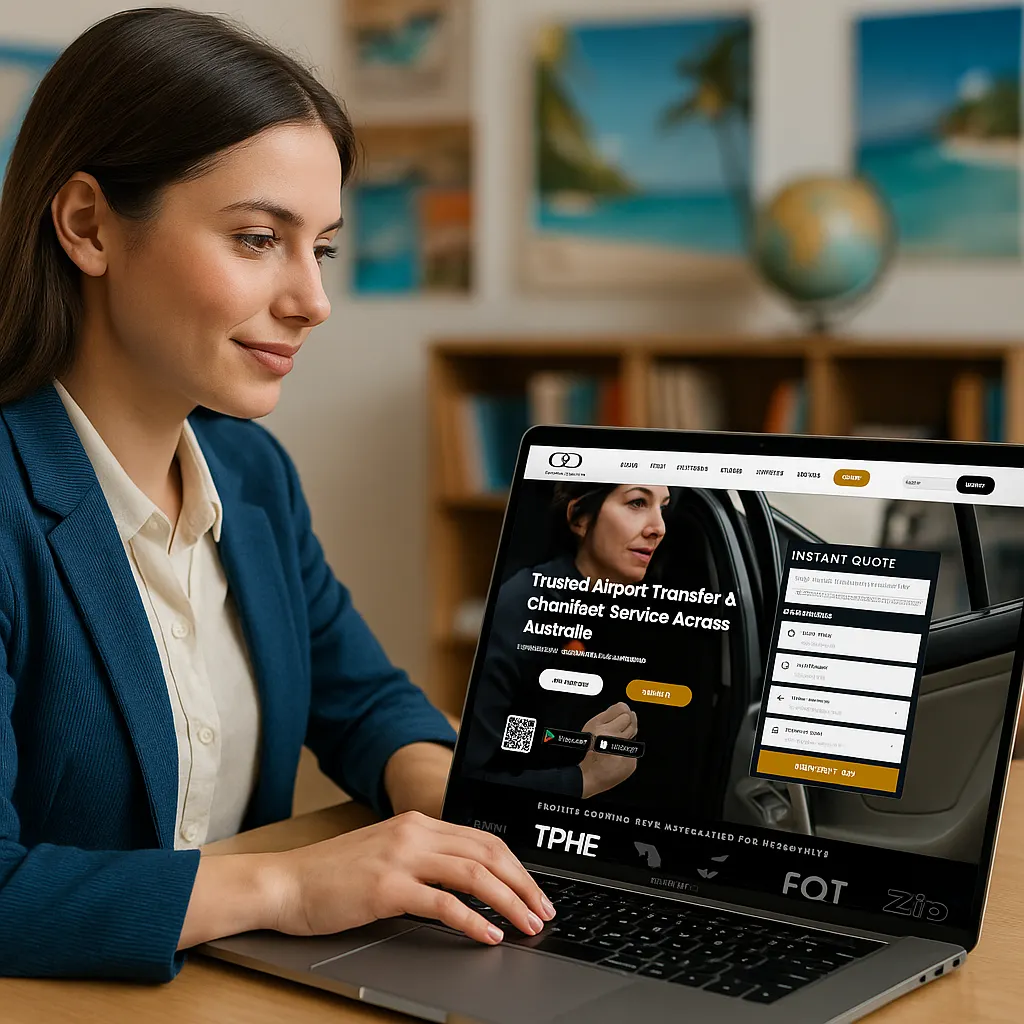
Cars on Demand’s dedicated platform for executive assistants was built specifically for this workflow. One account, one booking system, complete visibility across all transfers, and fixed invoicing that integrates cleanly with corporate expense processes. The EA books once, receives confirmation instantly, and has live driver tracking available to share with the executive from departure through to arrival.
What Technology Has Made Possible — and Expected
The technological standard for premium ground transport has moved substantially in the last three years, and passenger expectations have moved with it.
Real-time driver tracking is no longer a premium feature. It is a baseline expectation. An executive who cannot see where their car is thirty minutes before pickup is not confident in their transport arrangement. That anxiety has a cost — in mental bandwidth, in the time spent monitoring the situation, and in the fallback planning that runs quietly in the background when certainty is absent.
Cars on Demand’s technology platform — built on the RideMinder dispatch system — provides GPS tracking on every booking, automatic flight monitoring on all airport arrivals and departures, and proactive communication from confirmation through to completion. If a flight is delayed, the driver’s schedule adjusts automatically. If a flight lands early, the driver is notified. The passenger walks out of the terminal and their car is there.
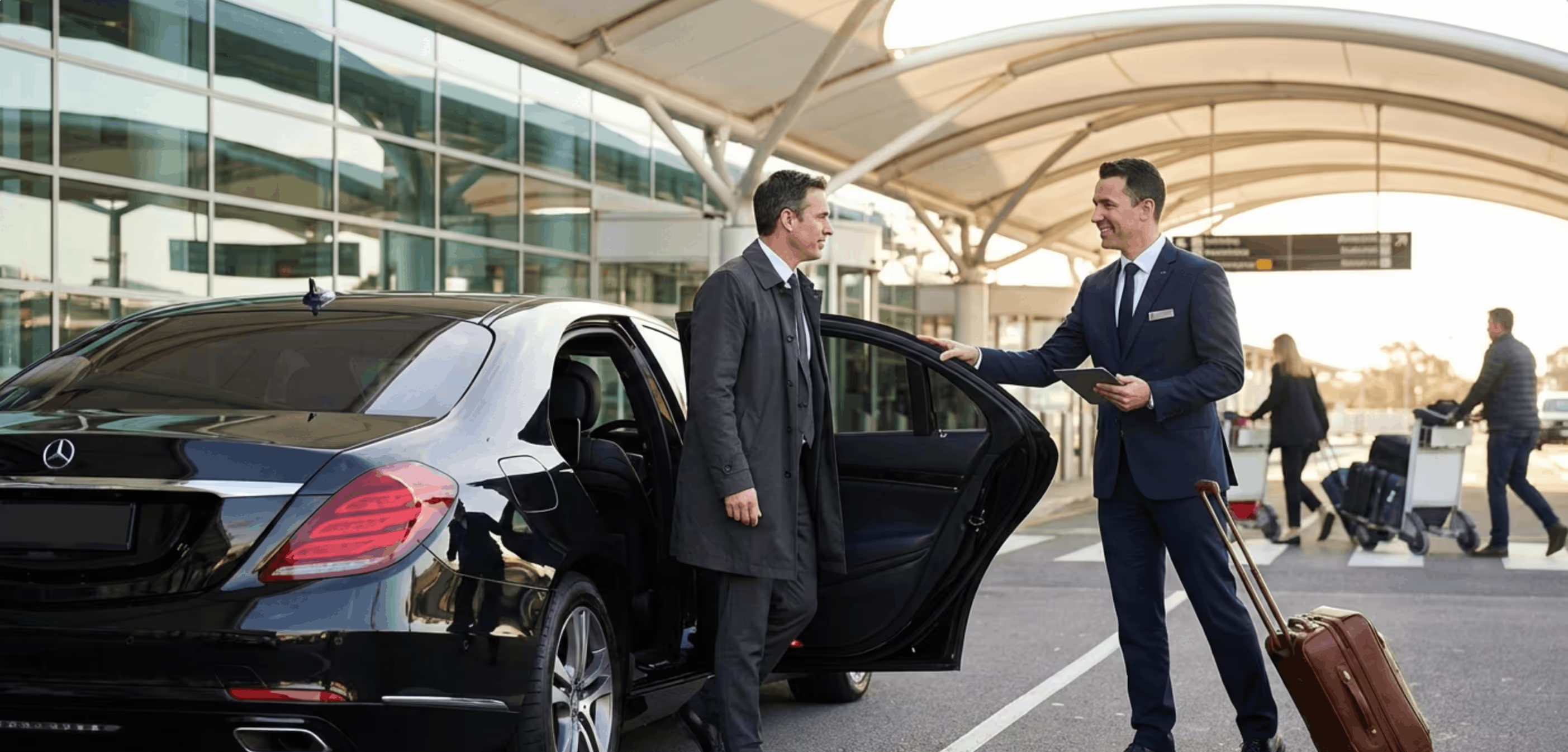
The fleet that delivers this experience runs to Mercedes-Benz E-Class and S-Class sedans, V-Class people movers for groups and families, and specialist vehicles for specific requirements. Every vehicle is presented to the same standard. Every driver is vetted and professionally accredited. The product is consistent because the system behind it is consistent.
The Meeting Point Question
One of the most overlooked sources of friction in airport ground transport is the pickup itself.
A passenger who lands at Sydney International after a long-haul flight, clears customs, and then has to navigate an unfamiliar arrivals hall looking for a driver they have never met is not starting their transfer experience well.
Precise, well-communicated airport meeting points eliminate this friction entirely. The driver is at a specific, known location, confirmed via the tracking link sent before pickup. The passenger walks directly to their car. The transfer begins without a moment of uncertainty.
This is the kind of detail that separates a professional ground transport operation from a platform that simply connects passengers with available drivers. The difference is not always visible before the trip. It is always visible during it.
The Total Cost of Failure
None of this means cost is irrelevant. It means the cost conversation has matured.
The executives and EAs making the most effective ground transport decisions are not asking “what is the cheapest option?” They are asking “what is the total cost of this decision, including the cost of failure?”
A rideshare that is $40 cheaper than a pre-booked chauffeur transfer looks like a saving on the invoice. When it cancels at 4:30am and the executive misses a 6am flight to a client meeting that was three weeks in the making, the actual cost of that decision is measured in thousands — lost revenue, reputational damage, and a relationship that has to be rebuilt. With airfares stabilised in 2026 but hotel rates continuing to rise, travel managers are scrutinising every line of the travel budget. The fixed-price transfer is increasingly the rational choice for any trip where the cost of disruption exceeds the cost of certainty.
This is why CEOs choose Cars on Demand. Not for the vehicle. For the operational certainty that makes the vehicle irrelevant as a variable.
The New Standard Across Australia
The ground transport market in Australia is bifurcating. On one side, the commodity segment — rideshare apps, metered taxis, and on-demand platforms where price is the primary differentiator and service consistency is not guaranteed. On the other, the professional segment — pre-booked, fixed-price, fully managed chauffeur services with accountability structures that the commodity model cannot replicate.
The executives migrating from the first to the second are not doing it because they want a more comfortable car. They are doing it because the professional model solves a risk management problem that the commodity model actively creates.
The new rule of executive travel in Australia in 2026 is straightforward.
If it cannot be relied upon, it is not worth booking.
Book Your Next Transfer
Experience the standard that Australia’s leading executives and executive assistants have already moved to.
Book your airport transfer | Call 1300 638 258 | Email admin@carsondemand.com.au
New to Cars on Demand? Claim $50 off your first transfer.
.avif)
Get a quote in 8 seconds