The Algorithm Trap: How Platform Economics Destroyed Driver Livelihoods and Deceived an Entire…



Save $50 on Your First Ride with Cars On Demand.

The Algorithm Trap: How Platform Economics Destroyed Driver Livelihoods and Deceived an Entire Industry
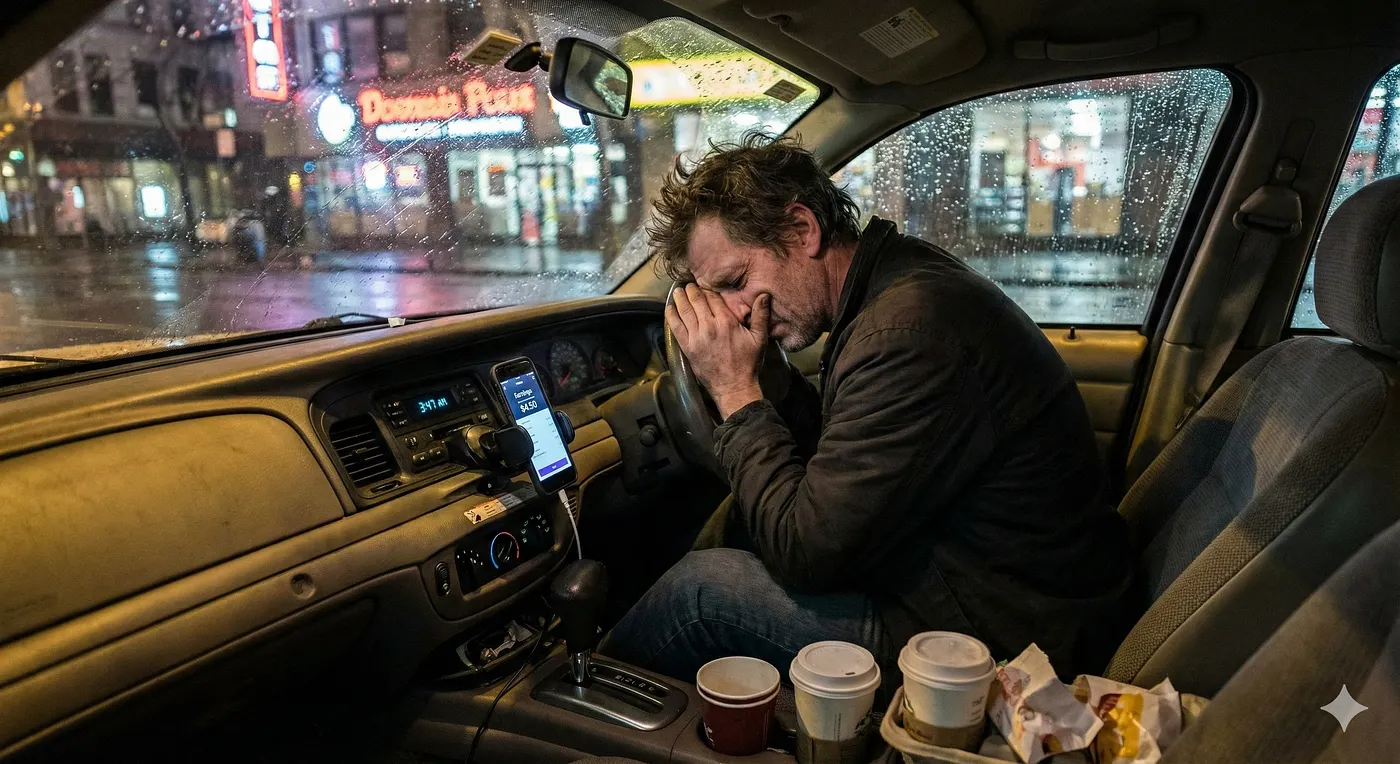
Working long hours, living in their cars, touting at airports, is this what we want ?
When a professional chauffeur service costs the same as a bus ticket, something fundamental has broken in the market. But the real story isn’t just about unsustainable pricing. It’s about how sophisticated algorithms designed to maximize corporate profits have systematically exploited powerless workers while training customers to expect the impossible.
Recent academic research into platform economy algorithms reveals a disturbing reality: what riders see as “innovation” is often powered by sophisticated manipulation of workers who have no meaningful way to understand, challenge, or escape the system controlling their livelihoods.
The Algorithm Makes You Work Without Understanding Why
Platform companies like Uber claim their limo software and automated dispatch systems simply match supply with demand. The reality is far more calculated.
Research from Columbia Law School reveals that these algorithms aren’t neutral matchmakers. They’re sophisticated behavioral manipulation tools designed to extract maximum productivity from drivers while minimizing their earnings. The system works through what academics call “algorithmic management”: using machine learning to allocate, optimize, and evaluate workers in ways that would be impossible with traditional limo dispatch systems.
Here’s how it works in practice:
Forward dispatch queuing automatically offers drivers their next job before they’ve finished the current one. Like Netflix auto-playing the next episode, it requires more effort to stop working than to keep going. Drivers find themselves trapped in an endless cycle of “just one more ride.”
Artificial urgency notifications tell drivers “demand is high in your area” or show arbitrary earnings targets that nudge them to stay online longer. Research shows these targets are often meaningless, designed purely to manipulate behavior rather than reflect actual market conditions.
Opaque acceptance rate penalties create fear among drivers that rejecting unprofitable trips will result in fewer or worse assignments in future. While platforms deny this, drivers universally report feeling pressured to accept every ride regardless of profitability.
Multi-armed bandit algorithms test different routes, pricing, and assignments on drivers as part of ongoing experiments. Essentially, platforms use workers as unpaid research subjects to improve the company’s intellectual property while systematically sending some drivers on less profitable routes purely to gather data.
This isn’t speculation. Academic research has documented these practices extensively. One study found that drivers often can’t act on market opportunities within the crucial hours that matter. Only 21% can detect market changes and update their availability within hours, while most take 24–48 hours to respond. By then, the opportunity has evaporated.
The Hidden Cost: When the Algorithm Works Against You
The most insidious aspect of algorithmic control is that individual harms are small and imperceptible, but they compound exponentially over time.
A five percent inefficiency on a single route might cost a driver a few dollars. The same five percent inefficiency imposed systematically by an algorithm costs that driver thousands of dollars annually. Multiply that across millions of drivers, and you’re looking at billions in wealth transferred from workers to corporations.
Research reveals several categories of algorithmic harms:
Incidental harms result from design choices like “overfitting,” when algorithms identify false correlations and act on them. For instance, an algorithm instructed to match drivers with riders likely to give high ratings might systematically assign female drivers slower, less profitable routes if riders are biased toward faster drivers. This creates a gender pay gap that appears to be “driver choice” but is actually algorithmic discrimination.
Divergent-interest harms occur when the platform prioritizes its own growth over driver earnings. A persistent oversupply of drivers benefits riders (shorter wait times) and the platform (lower prices attract more riders) while devastating driver earnings. The algorithm can create false surge notifications to pull more drivers online, oversaturating the market and reducing everyone’s earnings except the company’s.
Abusive practices involve deliberate deception. Platforms have been caught showing riders one price while paying drivers a different (lower) fare for the same trip. They’ve displayed “phantom cars” on maps to suggest more drivers are available than actually exist. They’ve manipulated surge pricing to benefit the company rather than balance supply and demand.
Academic research identifies these practices as potential torts, specifically fraudulent or negligent misrepresentation. When a platform tells drivers they’re “partners” in a joint-profit-maximizing enterprise while simultaneously designing algorithms to extract maximum value from those drivers at minimum cost, that’s not partnership. It’s exploitation enabled by information asymmetry.
The Race to the Bottom: Engineering Unsustainable Expectations
Here’s what most passengers don’t understand: current platform pricing is subsidized by three things: venture capital losses, driver exploitation, and deliberate market manipulation.
Platforms entered markets with high wages and bonuses to attract drivers. Once they established critical mass, investor pressure for profitability kicked in. Driver pay was slashed. Commission rates increased. The costs of working (insurance, fuel, maintenance, licensing) continued rising.
Where drivers once worked 7–8 hours to earn a living wage, they now work 16+ hours for the same amount. Nearly 30% of platform drivers work over 60 hours weekly. Almost 80% spend 11–20+ hours per week on manual tasks that integrated limo software would automate.
But passengers see only the result: cheaper fares. They’ve been conditioned to expect this as “normal,” unaware it’s built on a foundation that academic researchers have compared to “modern-day slavery.”
One driver interviewed in recent health research put it starkly: “Mini cabbing, mini killing, and eventually mini dying.”
The research revealed:
- More than 90% of drivers report work negatively impacts their health
- Chronic pain, diabetes, depression, and stress-related illness are endemic
- 45% miss revenue opportunities weekly due to algorithmic constraints
- Less than 5% are confident they capture every available opportunity
This isn’t sustainable. It’s not even profitable for most drivers. But it’s created a dangerous new normal where customers expect luxury service at poverty wages and blame drivers when quality inevitably suffers.
The Technology Illusion: Software Designed to Exploit
Platform companies market themselves as “technology companies” providing neutral limo apps and transport apps. But as one federal judge noted, “Uber does not simply sell software; it sells rides. Uber is no more a ‘technology company’ than Yellow Cab is a ‘technology company’ because it uses CB radios to dispatch taxi cabs.”
The technology isn’t neutral. It’s designed with specific goals:
Problem setting defines what the algorithm optimizes for. When platforms optimize for “reducing rider wait times” or “increasing rides per hour” rather than “maximizing driver earnings,” the algorithm systematically prioritizes platform growth over worker welfare.
Variable selection determines what data the algorithm uses. Platforms collect extraordinary amounts of data: location, speed, route efficiency, customer ratings, acceptance rates, phone battery level, time of day, neighbourhood demographics. This data can be weaponized to manipulate behavior.
Model training teaches the algorithm how to achieve its goals. When that goal is maximizing corporate profit rather than fairly compensating workers, the result is predictable: algorithms that systematically undermine driver earnings while maintaining plausible deniability.
A/B testing and experimentation means some drivers are routinely sent on less profitable routes purely as research subjects. They’re not informed. They’re not compensated for participating in experiments. They’re simply used to improve the company’s intellectual property.
Traditional limo dispatch systems and automated dispatch software are designed to support professional drivers. Algorithm-driven platforms are designed to extract maximum productivity regardless of human cost.
When Platform Economics Meets Premium Services: The Airport Transfer Problem
Platform companies have increasingly targeted the premium transport market, aggressively pursuing airport transfers, corporate chauffeur services, and executive transfers. But their algorithmic model fundamentally cannot deliver the service quality these markets require.
Airport transfers demand reliability that algorithms can’t guarantee. When an Executive Assistant books Sydney airport transfers for a visiting CEO, they need absolute certainty. Platform algorithms optimize for average wait times across thousands of rides, not guaranteed on-time performance for critical business travel. A driver who’s been manipulated into working a 16-hour shift and is running on exhaustion isn’t the right choice for Melbourne airport transfers carrying international executives.
Executive transfers require professional standards, not whoever’s closest. Corporate chauffeur services depend on consistently excellent drivers in well-maintained vehicles. Platform algorithms assign rides based on proximity and acceptance rates, not driver quality or vehicle standards. When you book executive transfers for board members or VIP clients, you can’t afford the lottery of whoever happens to be nearby when the algorithm processes your request.
Meet and greet services don’t work with exploited drivers. Professional airport transfers include meet and greet services, flight tracking, and the ability to handle last-minute changes. Platform drivers racing between jobs to make minimum wage can’t provide this level of attentive service. The algorithm doesn’t account for the professionalism required when greeting clients arriving on Brisbane airport transfers or Perth airport transfers.
Corporate travel needs transparent pricing, not surge manipulation. When companies book Adelaide airport transfers or Canberra airport transfers for their executives, they need fixed pricing they can budget for. Platform surge pricing can multiply costs unpredictably, and research shows these surges are often manipulated to benefit the platform rather than reflect actual supply and demand.
Premium transport requires sustainable driver economics. The corporate chauffeur market demands experienced, professional drivers who take pride in their service. Platform economics drive experienced drivers out of the industry. Research shows that only 25% of platform drivers are still active after one year. You can’t build consistent executive transfer services on a model with 75% annual driver turnover.
Platform companies are attempting to compete in the airport transfer and executive transfer markets using the same exploitative limo software and transport apps that have devastated driver livelihoods in the ride-hailing space. They’re offering Gold Coast airport transfers and Darwin airport transfers through the same algorithmic system that sends exhausted drivers on inefficient routes as behavioral experiments.
This doesn’t work. Corporate clients quickly discover that the cheapest airport transfers quote comes with hidden costs: unreliability, inconsistent service quality, drivers who are stressed and exhausted, and no meaningful accountability when things go wrong.
Why Premium Chauffeur Services Refuse the Algorithm Trap
At Cars on Demand, we’ve watched this race to the bottom with alarm. We’ve never been the cheapest option, and we never will be. Here’s why that matters, especially for airport transfers and executive transfers.
Fair compensation without algorithmic manipulation. Our drivers aren’t trapped on an algorithm treadmill working 100-hour weeks. Our limo software and transport apps are designed to support drivers, not exploit them. When you book Sydney airport transfers or Melbourne airport transfers with us, your driver is well-rested, professionally trained, and fairly compensated. We don’t use “forward dispatch” to trap drivers in endless work cycles. We don’t send false surge notifications. We don’t experiment on our drivers.
Transparent, sustainable pricing for corporate chauffeur services. We don’t use surge pricing, but our transparent fixed pricing reflects the actual cost of providing a professional service. There’s no algorithmic manipulation of fares. When your Executive Assistant books executive transfers for your leadership team, they know exactly what they’re paying. No surprises. No surge multipliers. No exploitation.
Technology that enhances service, not extracts value. Our limo apps and automated dispatch software enhance the driver experience rather than controlling it. Real-time flight tracking means Brisbane airport transfers and Perth airport transfers automatically adjust for delays. Our meet and greet services are built into the system, not tacked on as an afterthought. Professional limo dispatch systems create value for customers while respecting drivers as professionals.
Drivers treated as partners, not experimental subjects. We don’t run behavioral experiments on our drivers. We don’t use multi-armed bandit algorithms to test different routes and assignments for Adelaide airport transfers or Canberra airport transfers. We don’t collect torrents of personal data to manipulate behavior. Our drivers are genuine partners in delivering excellent service.
99.99% on-time reliability for airport transfers. When drivers aren’t racing between jobs, skipping breaks, and working themselves sick, they’re on time. Our track record speaks for itself. Whether it’s Gold Coast airport transfers, Darwin airport transfers, or corporate chauffeur services for your executive team, we deliver the reliability that premium transport demands.
Consistent quality for executive transfers. Because we don’t have 75% annual driver turnover, your executive transfers are handled by experienced professionals who understand corporate expectations. The same drivers serve your account over time, learning your preferences and maintaining the consistency that executive transfer services require.
The Legal Reckoning: When Algorithms Break the Law
Academic research identifies several potential legal causes of action against platforms engaging in algorithmic exploitation:
Fraudulent misrepresentation occurs when platforms tell drivers they’re “partners” in a joint-profit-maximizing enterprise while designing algorithms that systematically prioritize company profits over driver earnings.
Negligent misrepresentation occurs when platforms fail to exercise reasonable care in designing algorithms, resulting in economic harm to drivers. For instance, through “overfitting” that creates systematic bias.
Breach of the duty of good faith and fair dealing occurs when platforms make representations about how their algorithms work while secretly optimizing for goals that undermine driver earnings.
Research suggests that showing “phantom surge zones” to manipulate driver behavior, systematically offering only low-value fares to drivers who demonstrate willingness to accept them, or conducting A/B tests that route some drivers less profitably purely to gather data could all constitute actionable torts.
The challenge is proof. Algorithms are “black boxes” protected as trade secrets. But the information asymmetry that enables exploitation also creates liability when platforms make representations they know to be false or misleading.
What Customers Need to Know
When you choose the cheapest ride option for your airport transfers or executive transfers, you’re participating in a system that academic research has identified as:
- Using sophisticated algorithms to manipulate vulnerable workers
- Conducting behavioral experiments on drivers without consent
- Systematically prioritizing corporate growth over worker welfare
- Creating health crises among drivers (90%+ report work harms their health)
- Extracting value from workers to benefit venture capital investors
When you choose a premium chauffeur service for your corporate chauffeur needs, you’re supporting:
- Professional drivers compensated fairly without algorithmic manipulation
- Well-maintained vehicles and consistent service standards
- Sustainable business practices that don’t rely on worker exploitation
- Limo software and dispatch systems designed to support rather than control
- An industry built on quality service, not venture capital subsidies
The platform economy has taught customers to expect the impossible: professional airport transfers that cost less than a taxi, executive transfers without executive-level service, corporate chauffeur reliability without corporate-level investment. But research shows this pricing is built on algorithmic exploitation of workers who have no meaningful ability to understand or challenge the systems controlling their livelihoods.
Building an Industry on Partnership, Not Exploitation
The future of ground transportation doesn’t require choosing between innovation and fairness. Proper limo dispatch systems, intelligent automated dispatch software, and well-designed transport apps can enhance service quality while treating workers with dignity.
But it requires rejecting the platform economy’s fundamental premise: that algorithmic opacity justifies any outcome as long as it’s profitable for the company.
At Cars on Demand, we’ve built our business on actual partnership, not the false “partnership” of algorithmic exploitation. After 35 years operating across Sydney, Melbourne, Brisbane, Perth, Adelaide, Canberra, and Darwin, with 99.99% on-time reliability and over 5,000 corporate clients, we know this model works for airport transfers, executive transfers, and corporate chauffeur services.
The only question is whether the industry and customers will choose sustainability and fairness over exploitation before regulators and courts force the issue.
Academic research suggests that day is coming. Platform companies face potential liability for fraudulent misrepresentation, negligent algorithm design, and breach of good faith duties to workers. The information asymmetry that enables exploitation also creates legal vulnerability.
Smart companies will adapt before they’re forced to. Smarter customers will choose service providers who never needed forcing in the first place. Especially when those customers are Executive Assistants responsible for airport transfers and executive transfers that absolutely cannot fail.
Ready to experience airport transfers and corporate chauffeur services built on fairness rather than algorithmic exploitation? Book with Cars on Demand and travel with drivers treated as genuine partners, using limo software designed to enhance service rather than extract value. From Sydney airport transfers to executive transfers across every Australian capital city, we deliver the reliability your business demands. Apply for corporate account or call 1300 638 258 to speak with our team.
Because the algorithm should work for people, not the other way around.
References: This analysis draws on academic research including “Algorithmic Harms to Workers in the Platform Economy: The Case of Uber” (Columbia Journal of Law and Social Problems, 2020), health surveys of platform drivers (IWGB, 2025), and extensive documentation of platform economy practices in legal and technology scholarship.
.avif)
Get a quote in 8 seconds