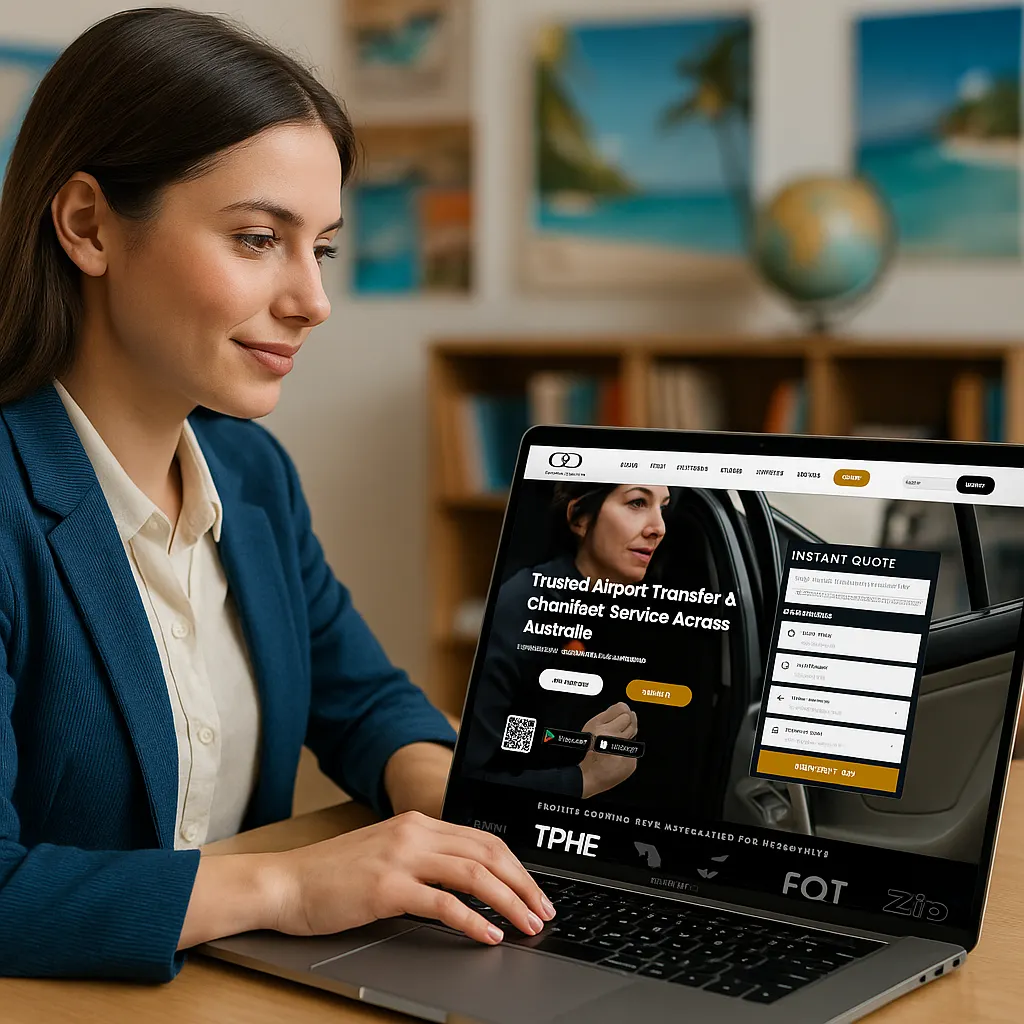
The Autonomous Vehicle Revolution: What Waymo’s Senate Testimony Means for Australia’s Premium…


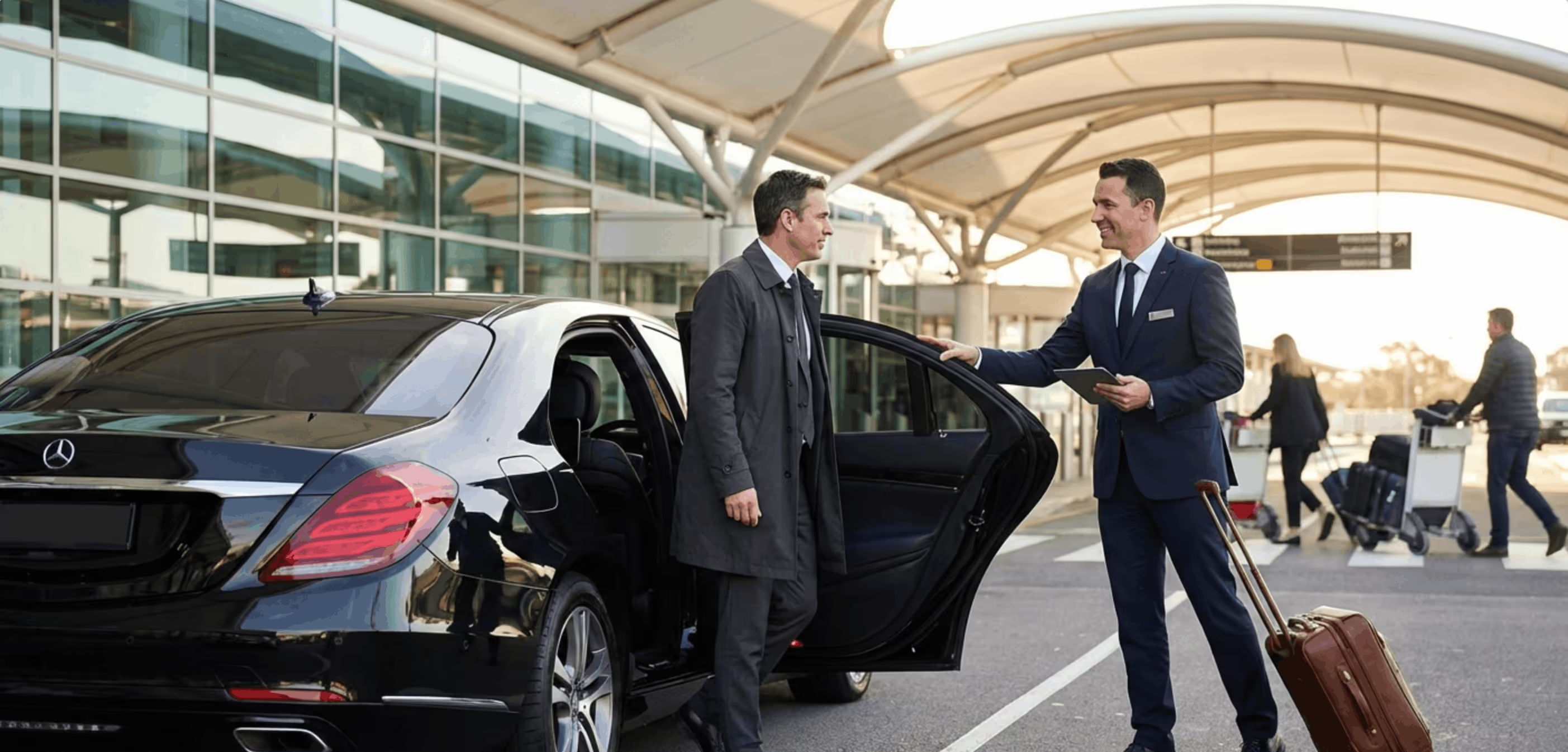
Save $50 on Your First Ride with Cars On Demand.

The Autonomous Vehicle Revolution: What Waymo’s Senate Testimony Means for Australia’s Premium Chauffeur Industry
By Simon Kalipciyan, Chief Operating Officer, Cars on Demand
A young couple in the back of a chauffeured car booked via an app
Key Takeaways
- Waymo’s Scale is Real: 200 million autonomous miles, 400,000+ weekly rides, and impressive safety data prove AVs are no longer theoretical
- The Global AV Race: America vs. China for trillion-dollar autonomous vehicle dominance will set worldwide transport standards
- Technology’s Limits: Autonomous vehicles cannot replicate executive discretion, emotional intelligence, or premium service judgment
- Premium Service Distinction: Human-driven chauffeur services occupy a fundamentally different market than autonomous ride-hailing
- Australia’s Future: We need proactive AV policy while protecting what makes premium transport irreplaceable — the human element
On February 4, 2026, Dr. Mauricio Peña, Chief Safety Officer at Waymo, delivered compelling testimony before the U.S. Senate Committee on Commerce, Science, and Transportation about the future of autonomous vehicles. As someone who has spent over three decades building Australia’s premier chauffeur service, I found his testimony both fascinating and concerning for the future of our industry.
Let me share my perspective on what this means for premium transport in Australia and why the human element in chauffeur services remains irreplaceable.
The Waymo Reality Check: Scale Meets Safety
Dr. Peña’s testimony painted an impressive picture of autonomous vehicle progress. Waymo now operates across six major U.S. metro areas, provides over 400,000 rides weekly, and has completed nearly 200 million fully autonomous miles. These aren’t theoretical statistics — they represent real people getting to real destinations without anyone behind the wheel.
The safety data is equally striking. According to their peer-reviewed research, the Waymo Driver demonstrates 10x fewer serious injury crashes and 12x fewer injury-causing crashes involving pedestrians compared to human drivers. Swiss Re’s analysis of their first 25 million autonomous miles showed an 88% reduction in property damage claims and a 92% reduction in bodily injury claims.
As someone responsible for maintaining Cars on Demand’s 99.99% on-time reliability record across Sydney, Melbourne, Brisbane, Perth, Adelaide, Canberra, Darwin, Gold Coast, Sunshine Coast, and Cairns, these numbers demand attention.
The Technology Arms Race: America vs. China
Dr. Peña’s testimony included a stark warning that caught my attention immediately:
“The United States is locked in a global race with Chinese AV companies for the future of autonomous driving, a trillion-dollar industry comparable in strategic importance to flight and space travel.”
This isn’t just about transportation technology — it’s about who sets the global standards for the next generation of mobility. The leading Chinese AV startups have already tested on U.S. roads and are now rapidly expanding into Europe, the Middle East, and Asia. Waymo’s call for federal legislation to establish a national AV framework isn’t just corporate lobbying; it’s a strategic imperative to maintain American technological leadership.
For Australia, this raises critical questions: Will we adopt American safety standards, Chinese protocols, or develop our own framework? And more importantly, are we prepared for the inevitable arrival of autonomous vehicles on Australian roads?
What Premium Chauffeur Services Understand That Autonomous Vehicles Don’t
Here’s where my decades of experience in premium transport come into sharp focus. While I respect Waymo’s technological achievements, their testimony inadvertently highlights everything that makes human-driven premium chauffeur services irreplaceable.
The Meet and Greet Advantage
Dr. Peña mentions that Waymo serves “families bringing newborns home from the hospital” — but can an autonomous vehicle provide the reassurance and assistance that a trained professional driver offers during such a milestone moment?
At Cars on Demand, our meet and greet service means a professionally trained driver who:
- Assists with luggage, prams, and baby capsules
- Provides a human presence during stressful or emotional journeys
- Adapts to unexpected situations with judgment and compassion
- Offers local knowledge and conversation when desired
An algorithm cannot read body language, sense when a passenger needs assistance but is too polite to ask, or provide the emotional intelligence that defines premium service.
Executive Transportation Requires Human Judgment
Waymo’s testimony emphasizes their service for “patients heading to medical appointments, travelers going to the airport, parents picking up their children from soccer practice.” These are important journeys, but they’re fundamentally different from the executive transport that defines our business.
When Executive Assistants book our services for their CEOs, they’re not just arranging point-to-point transport. They’re ensuring:
- Absolute discretion and confidentiality during phone calls and meetings
- Professional appearance and demeanor that reflects corporate standards
- Flexibility to handle last-minute itinerary changes
- Understanding of corporate protocols and VIP service expectations
Our Sydney airport limo service isn’t competing with autonomous ride-hailing — we’re providing a completely different tier of service that technology cannot replicate.
Waymo vs. Premium Chauffeur: The Service Comparison
comparison table
The RideMinder Advantage: Technology Serving Human Excellence
Dr. Peña’s testimony detailed Waymo’s comprehensive safety framework, including their 12 methodologies for evaluating autonomous system readiness. It’s impressive engineering, but it misses a fundamental truth about premium transport: the best technology enhances human service rather than replacing it.
At Cars on Demand, we operate exclusively on the RideMinder dispatch technology platform — currently the hottest dispatch system in Australia with all major chauffeur companies now using it. RideMinder provides:
- Real-time car tracking via our mobile and web apps
- Intelligent dispatch that accounts for traffic, flight delays, and optimal routing
- Automated communications that keep passengers informed
- Data analytics that help us maintain our industry-leading reliability
The difference? RideMinder enhances what skilled professional drivers do best, rather than attempting to eliminate them. Our technology serves our drivers and passengers; it doesn’t replace the human judgment and service excellence that define premium chauffeur transport.
The Accessibility Question: Good Intentions, Complex Reality
Waymo’s testimony highlighted their commitment to serving blind and low-vision riders through features like screen reader support and audio cues. Dr. Peña stated: “For blind and low-vision riders, Waymo provides a reliable, consistent, and independent mobility experience.”
This is genuinely admirable, but it also reveals the limitations of autonomous service. Passengers with disabilities often need more than accessible technology — they need human assistance. A professional chauffeur can:
- Guide visually impaired passengers safely to their vehicle
- Assist wheelchair users with transfers and securing mobility devices
- Provide physical support navigating unfamiliar environments
- Respond to medical emergencies with trained first aid intervention
Technology can enable independence, but premium chauffeur service provides dignity, safety, and personalized care that autonomous vehicles cannot deliver.
The Employment Reality: What Dr. Peña Didn’t Fully Address
Waymo’s testimony acknowledged that “careers in the transportation industry will shift” while emphasizing the new jobs their technology creates: mechanics, vehicle technicians, dispatchers, and facilities managers. They cite studies suggesting 190 jobs per 1,000 vehicles across development, production, distribution, and maintenance.
What’s missing from this narrative is the human cost of eliminating professional driving as a career path. At Cars on Demand, we employ approximately 1,500 professional drivers across Australia — skilled professionals who provide for their families through their expertise in customer service, navigation, and safe driving.
These aren’t jobs that can be easily retrained into vehicle technician roles. Many of our drivers have decades of experience building relationships with corporate clients, understanding the nuances of premium service, and developing the judgment that comes only from years behind the wheel.
The AV industry’s promise of “non-traditional pathways to careers” and “scholarships for technical schools” doesn’t address the reality that we’re discussing the wholesale elimination of a skilled profession that provides middle-class employment for millions globally.
The Safety Paradox: Perfect Technology, Imperfect World
Dr. Peña’s testimony emphasizes Waymo’s rigorous safety framework, including their three-layer governance structure culminating in their Safety Board composed of the Chief Safety Officer, Chief Product Officer, and a co-CEO. Before any software update or service territory expansion, this board must approve the change.
This is thorough engineering, but it reveals a fundamental limitation of autonomous systems: they operate within predefined parameters. Real-world premium transport requires adapting to situations that cannot be pre-programmed:
- A passenger experiencing a medical emergency requiring hospital diversion
- Severe weather conditions requiring human judgment about route safety
- Security concerns requiring discretion and protective driving techniques
- Cultural or diplomatic protocols that vary by passenger and situation
At Cars on Demand, our drivers are trained professionals who combine safe driving with situational awareness that no current AI system can replicate. Our 99.99% on-time reliability isn’t just about avoiding accidents — it’s about professional judgment that ensures every aspect of the journey meets premium standards.
The Australian Context: What Happens Here?
Waymo’s testimony was delivered to the U.S. Senate, but the implications extend far beyond American borders. Dr. Peña warned that “Chinese AV competitors will fill the gap and set the safety and technical standards for the rest of the world” if America doesn’t establish national AV legislation.
For Australia, this raises urgent policy questions:
- Will we wait for international standards or develop our own AV framework?
- How will we balance innovation with the protection of Australian transport jobs?
- What role will human-driven premium services play in a partially autonomous future?
Australia’s transport industry needs to engage with these questions now, before autonomous vehicles arrive and force reactive rather than proactive policy decisions.
The Premium Service Distinction: Why Human Drivers Will Always Matter
After reviewing Dr. Peña’s comprehensive testimony, I’m more convinced than ever that premium chauffeur services occupy a fundamentally different market segment than autonomous ride-hailing.
Waymo may be perfect for:
- Cost-conscious riders prioritizing price over service
- Tech-enthusiastic early adopters
- Standard point-to-point transportation needs
- Cities where parking and traffic congestion make car ownership impractical
But Cars on Demand serves clients who value:
- Human discretion and confidentiality during sensitive business calls
- Professional appearance and demeanor that reflects corporate standards
- Personalized service that adapts to individual preferences and needs
- Reliability backed by human judgment when technology fails or circumstances change
Our premium fleet isn’t competing with autonomous vehicles any more than five-star hotels compete with Airbnb. We serve different markets with different expectations.
Technology That Empowers Rather Than Replaces
The most revealing aspect of Waymo’s testimony is what it demonstrates about the role of technology in premium transport. Dr. Peña described their extensive use of simulation, real-world testing, and closed-course evaluation to validate their autonomous systems.
At Cars on Demand, we take a different approach: technology that empowers professional drivers to deliver exceptional service. Our mobile and web apps, available at carsondemand.link/register, provide:
- Instant booking with transparent flat-fee pricing
- Real-time car tracking so passengers know exactly when their driver will arrive
- Secure payment processing via Stripe for safe, contactless transactions
- Trip history and preferences that enable personalized service
- 24/7 AI assistance for booking questions and support
Notice the difference? Our technology serves the passenger-driver relationship rather than attempting to eliminate it.
The Road Ahead: Coexistence, Not Replacement
Dr. Peña’s testimony makes clear that autonomous vehicles are coming, they’re safer than initially expected, and they will reshape urban transportation. I don’t dispute any of these facts.
What I do dispute is the assumption that autonomous ride-hailing will replace premium chauffeur services. The two will coexist, serving different market segments with different needs and expectations.
For business travelers arriving at Sydney Airport who need discretion, professionalism, and human judgment, our Sydney airport transfers will remain the premium choice. For families bringing newborns home from hospital who want a professional driver’s reassurance and assistance, human chauffeurs will continue to provide irreplaceable value.
Protecting Australian Excellence in Premium Transport
As autonomous vehicles arrive in Australia — and they will arrive — our industry needs to focus on what makes premium chauffeur service irreplaceable:
- Elevate service standards beyond what technology can provide
- Invest in driver training that emphasizes emotional intelligence and judgment
- Leverage technology like RideMinder to enhance human service
- Communicate our value proposition to clients who may be tempted by autonomous alternatives
- Advocate for regulations that maintain safety and service standards across all transport modes
At Cars on Demand, we’re not afraid of autonomous vehicles. We’re confident that after 35+ years building Australia’s premier chauffeur service, we understand what our clients truly value — and it’s not just getting from point A to point B.
The Human Element: What No Algorithm Can Replicate
Waymo’s impressive safety statistics — 10x fewer serious injuries, 12x fewer pedestrian crashes — represent genuine progress in automotive technology. But they measure only one dimension of transportation: physical safety.
Premium chauffeur service encompasses dimensions that no autonomous system can currently replicate:
- The warmth of a greeting that makes a weary traveler feel welcomed
- The discretion that allows a CEO to take a sensitive call without concern
- The judgment to suggest an alternate route during unexpected traffic
- The empathy to recognize when a passenger needs conversation or silence
- The professionalism that reflects well on the corporate client who arranged the transport
These aren’t minor details — they’re the essence of premium service. And they require human intelligence, emotional awareness, and decades of professional experience.
Looking Forward: The Premium Chauffeur Advantage
Dr. Peña’s Senate testimony offers a glimpse into a future where autonomous vehicles handle much of America’s routine transportation. It’s an impressive vision backed by substantial data and genuine safety improvements.
But for those of us who have spent our careers building premium chauffeur services, the testimony actually reinforces our value proposition. The more transportation becomes commoditized through autonomous ride-hailing, the more premium human-driven service will stand out.
At Cars on Demand, we’re not competing with Waymo or future autonomous services. We’re serving a market segment that values professional human service, guaranteed reliability, and the peace of mind that comes from 35+ years of excellence in chauffeur transport.
Book your next premium transfer through our app at carsondemand.link/register and experience the difference that professional human service makes. Some things technology will never replace — and premium chauffeur transport is one of them.
About the Author
Simon Kalipciyan is Chief Operating Officer of Cars on Demand, Australia’s premium chauffeur service established in 1990. With operations across Sydney, Melbourne, Brisbane, Perth, Adelaide, Canberra, Darwin, Gold Coast, Sunshine Coast, and Cairns, Cars on Demand maintains a 99.99% on-time reliability record serving over 5,000 Executive Assistants and corporate clients nationwide. Simon has over three decades of experience in premium transportation and regularly provides industry analysis on the future of chauffeur services in Australia.
For premium chauffeur service that combines cutting-edge technology with irreplaceable human expertise, contact Cars on Demand at 1300 638 258 or visit www.carsondemand.com.au
.avif)
Get a quote in 8 seconds