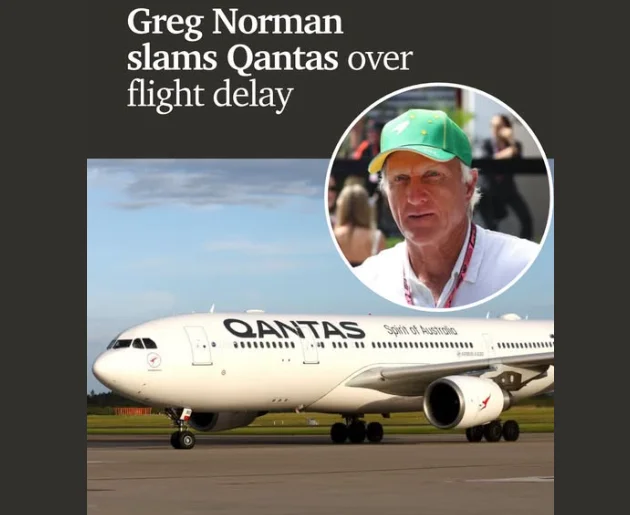
The Iran War and Australian Corporate Travel: What Every Business Traveller Needs to Know in 2026



Save $50 on Your First Ride with Cars On Demand.

There is a hole in the sky where one of the world’s busiest aviation crossroads used to be.
Where a dense web of aircraft once linked Europe, Asia and Africa across the Middle East, there is now a yawning gap. As conflict escalated in Iran, vast swaths of regional airspace closed or emptied. And because this region sits at the centre of modern long-haul travel, the disruption is rippling far beyond it. CNN
For Australian corporate travellers, the numbers attached to that hole are significant and personal.
In March 2025, a year ago, Emirates carried more than 65,000 passengers inbound to Australia from the UAE or Singapore, plus another 7,000 from New Zealand. Etihad carried more than 14,000 from the UAE. Qatar Airways inbound passengers numbered more than 46,000. All three carriers have dramatically reduced flight frequencies to and from Australia in March and April 2026. Australian Frequent Flyer
Those are not abstract statistics. Those are the seats that were there last year and are not there now. And the passengers who needed them are still trying to get where they were going.
What Happened — and When
On 28 February 2026, coordinated US and Israeli strikes on Iran triggered the most significant disruption to global aviation since the Russia-Ukraine war.
Aviation authorities issued conflict-zone advisories across large parts of the Middle East, prompting flight suspensions, reroutes and widespread delays. Dubai, Doha and Abu Dhabi are among the world’s busiest connection points for Europe-bound travellers, and when those corridors tightened, the ripple effect stretched far beyond the region itself. International Traveller
As of 11:30am AEDT on 3 March 2026, flight-tracking site FlightAware logged 17,100 delays and 3,000 cancellations worldwide, with Gulf carriers accounting for the majority. VisaHQ
Virgin Australia temporarily suspended its flights to Doha — previously operated by Qatar Airways — with services now cancelled until at least mid-June 2026. Since Qatar Airways acquired a 25 percent stake in Virgin Australia in 2025, the Australian airline had been utilising Qatar’s resources to provide regular flights between Australian cities and Doha. With about 87 percent of Qatar’s usual flights grounded due to airspace restrictions, those partnership services came to an abrupt halt. Travel And Tour World
The operational consequences extended beyond fuel and routes. Crew members and aircraft became stranded in affected regions, causing knock-on disruption well beyond the Middle East itself. An aircraft anticipated to be in Singapore or Brisbane was instead sitting in London, disrupting schedules globally. CNN
The Cost: What Australian Airports and Passengers Are Actually Absorbing
Prior to 28 February 2026, international travel into and out of Australia was performing reasonably well, although inbound tourist numbers were still below 2019 levels. Business travel had not fully recovered either, with low consumer confidence and high airfares already creating headwinds. The conflict arrived into an aviation sector that was already under financial pressure. Australian Frequent Flyer
The fuel shock has been severe. Jet fuel prices doubled to between USD $190 and $200 per barrel since late February due to supply disruptions including the Hormuz Strait situation. Australia imports over 80 percent of its jet fuel from Asian refineries reliant on Middle East crude. Travel And Tour World
Unlike domestic fuel excise cuts benefiting motorists, aviation fuel remains exempt from government relief, forcing carriers to pass costs directly to passengers through higher fares and additional charges. Qantas, Virgin Australia, Jetstar, and Air New Zealand have all announced significant operational changes affecting thousands of travellers. Nomad Lawyer
For Australian travellers, the fallout has been particularly visible on journeys to the UK and Europe, where the UAE and Qatar are central connecting markets. The issue has moved beyond flight cancellations and airspace disruption and into a more commercially significant phase where higher fares could start to influence demand, booking patterns and the cost of long-haul travel. Travel Monitor
Fares on popular routes may increase 10 to 15 percent or more as demand compresses into fewer available seats. Seats shrinking and surcharges climbing will likely persist through at least May 2026 until supply dynamics stabilise. Nomad Lawyer
Getting to Europe From Australia in 2026: What the Routes Look Like Now
Australians have become accustomed to transiting through the Middle East when flying to Europe. But given the ongoing disruptions caused by the Iran war, many are now considering alternative routes. Airlines including Emirates, Etihad and Qatar Airways have resumed running some flights, but with reduced schedules. Airfares via the Middle East are currently quite reasonable — but there is a reason for this. Middle Eastern airlines could be forced to cancel flights at short notice. Australian Frequent Flyer
The obvious alternative is to take a one-stop routing via an Asian hub such as Singapore, Kuala Lumpur, Bangkok, Hong Kong, Seoul, Taipei, or Colombo. These flights are very popular at the moment and may be more expensive than usual. Most airlines flying from those Asian airports to Europe are currently taking a flight path over Central Asia, the Caucasus and Turkey, avoiding Iranian airspace to the south and Russian airspace to the north. Australian Frequent Flyer
The Sydney-Perth-Paris Qantas service has switched to Sydney-Singapore-Paris from 20 April until 25 July 2026. Australian Frequent Flyer
The practical consequence for corporate travel managers is that routes which used to take 24 hours now take 28 to 32. Connections that used to be seamless now require contingency planning. And the margin for error in the Australian departure leg — which used to feel generous — has shrunk considerably.
The Insurance Gap That Is Catching Companies Off Guard
This is the issue that has moved fastest from inconvenient to genuinely dangerous for corporate travel programmes.
War-risk cover has become a central issue. Insurers are reviewing exposure and reassessing risk appetite. Premiums for aviation risks are already increasing, with rate rises of 10 percent or more for lower-risk carriers and significantly higher increases for airlines operating Middle East routes. Kennedys Law LLP
Most travel insurance policies exclude war and civil unrest, so incidental costs such as extra accommodation are likely to be out of pocket. Travellers are advised to keep receipts for incidental costs and document all airline communications, as this evidence may assist with later credit-card chargeback claims even where war exclusions apply. VisaHQ
The conflict has been formally classified as a known event by insurers. Any policies or trips booked after 28 February 2026 generally will not cover claims arising from the conflict. Companies reviewing their Product Disclosure Statements now are doing so after the window for meaningful protection has largely closed.
The ACCC has noted that consumer guarantees in the Australian Consumer Law are unlikely to apply if the airline delays or cancels a flight due to the actions of a third party such as a government closing its airspace. Whether a consumer is entitled to a refund will depend on the terms and conditions of their booking. ACCC
What Australian Corporate Travel Managers Should Do Right Now
Check Smartraveller before every international booking. Read the travel advice for your destination and all transit points and subscribe for free updates. Do not travel advice also applies to transit and layovers in affected locations. Airspace may close at short notice. Flights can change or stop suddenly. Borders can close. Smartraveller
Amend rather than cancel. Check whether your airline has issued a travel waiver covering free changes, travel credits, or refunds. If you booked via a travel agent and are not departing immediately, avoid flooding phone lines — agents are prioritising the most urgent departures first. International Traveller
Review insurance immediately. Understand what your current policy covers for conflict-related disruptions. If policies were renewed or travel booked after 28 February 2026, assume conflict coverage is excluded and seek specialist advice urgently.
Build extra time into all international itineraries. Rerouted flights are longer. Connections through alternate hubs add hours. Executives who used to arrive in London in 24 hours via Dubai are now looking at 28 to 32 hours via Singapore or other alternative routing. Schedules on the Australian end need to reflect this new reality.
Diversify routing options. For mobility managers, the take-away is to diversify routing options, secure alternative land-bridge transport within Europe where possible, and check employee passports for minimum-validity rules in case detours require Schengen or UK transit. VisaHQ
The One Part of Every Trip You Still Control
In a travel environment where almost every variable has become uncertain, ground transport on the Australian end of every trip remains firmly within your control. And that controllability is worth considerably more than it used to be.
An executive whose Dubai connection has been cancelled arrives back in Sydney at a different time, on a different aircraft, at a different terminal than planned. A rideshare booked for the original arrival time has moved on. An app re-request at 1am from an international terminal during a chaotic period of rerouted arrivals produces exactly the outcome you would expect.
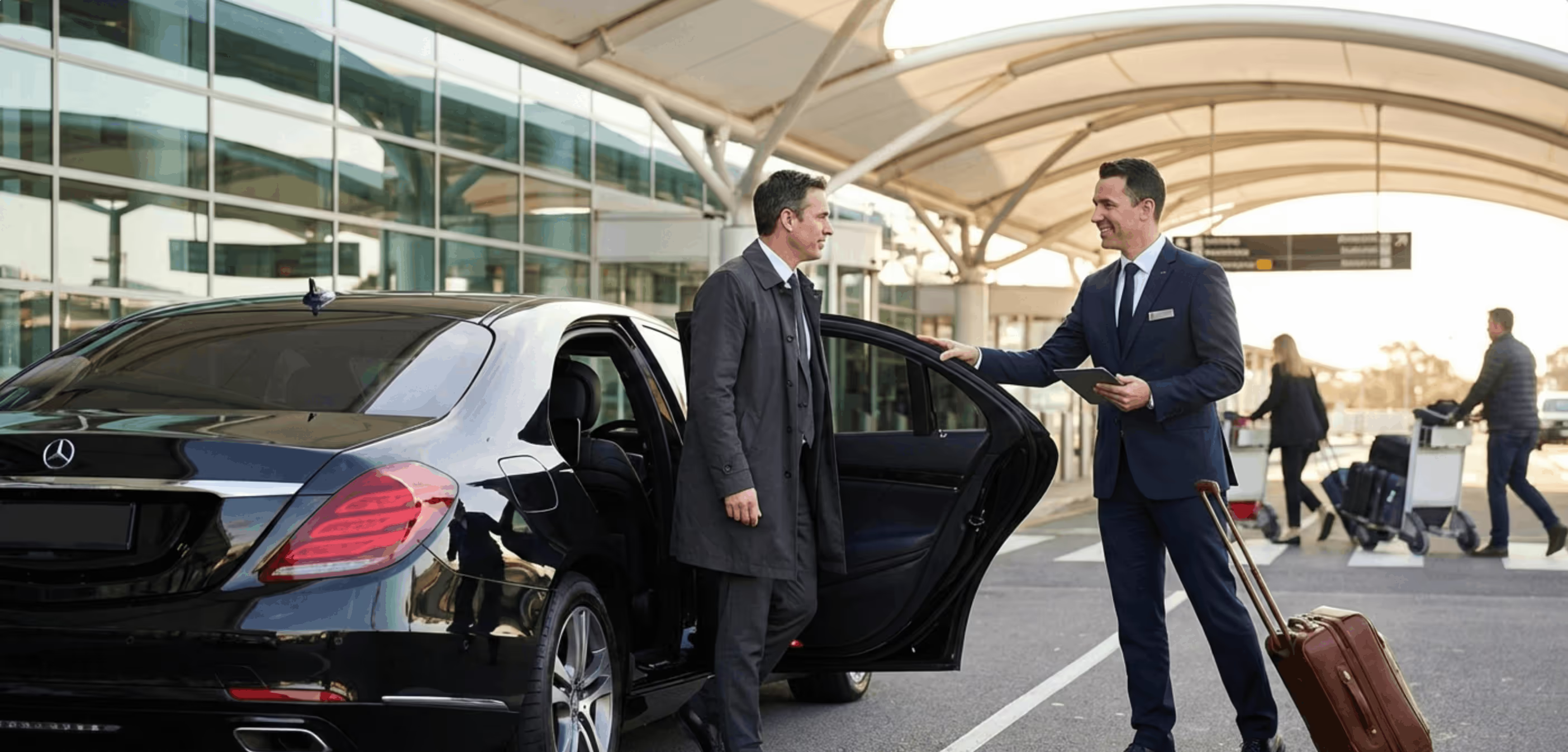
A pre-booked professional chauffeur service with live flight tracking adjusts automatically. The driver is not monitoring the original scheduled arrival. They are monitoring the actual tail number of the aircraft. When it changes terminal, when it lands 90 minutes late, when the rerouted Singapore connection finally comes in — the driver knows before the executive does, and is positioned accordingly.
This is what Cars on Demand’s technology platform, built on the RideMinder dispatch system, is designed for. Automatic flight monitoring on every booking. Real-time adjustment for delays and reroutes. A 24-hour Australian support line that answers when something changes at 2am. Fixed pricing that does not surge because a flight came in late on an Anzac long weekend.
For executive assistants managing multiple executives through an unprecedented period of travel disruption, one account covers Sydney, Melbourne, Brisbane, Perth, Adelaide, Gold Coast, Canberra, Darwin, and Cairns. Consistent fixed pricing. Consistent service standards. One account. No surge regardless of what time a rerouted flight finally lands.
When the world outside the terminal is uncertain, the car waiting inside it should not be.
Book your corporate airport transfer with Cars on Demand | Call 1300 638 258 | admin@carsondemand.com.au
New to Cars on Demand? Claim $50 off your first transfer. Claim your $50 welcome credit here.
.avif)
Get a quote in 8 seconds