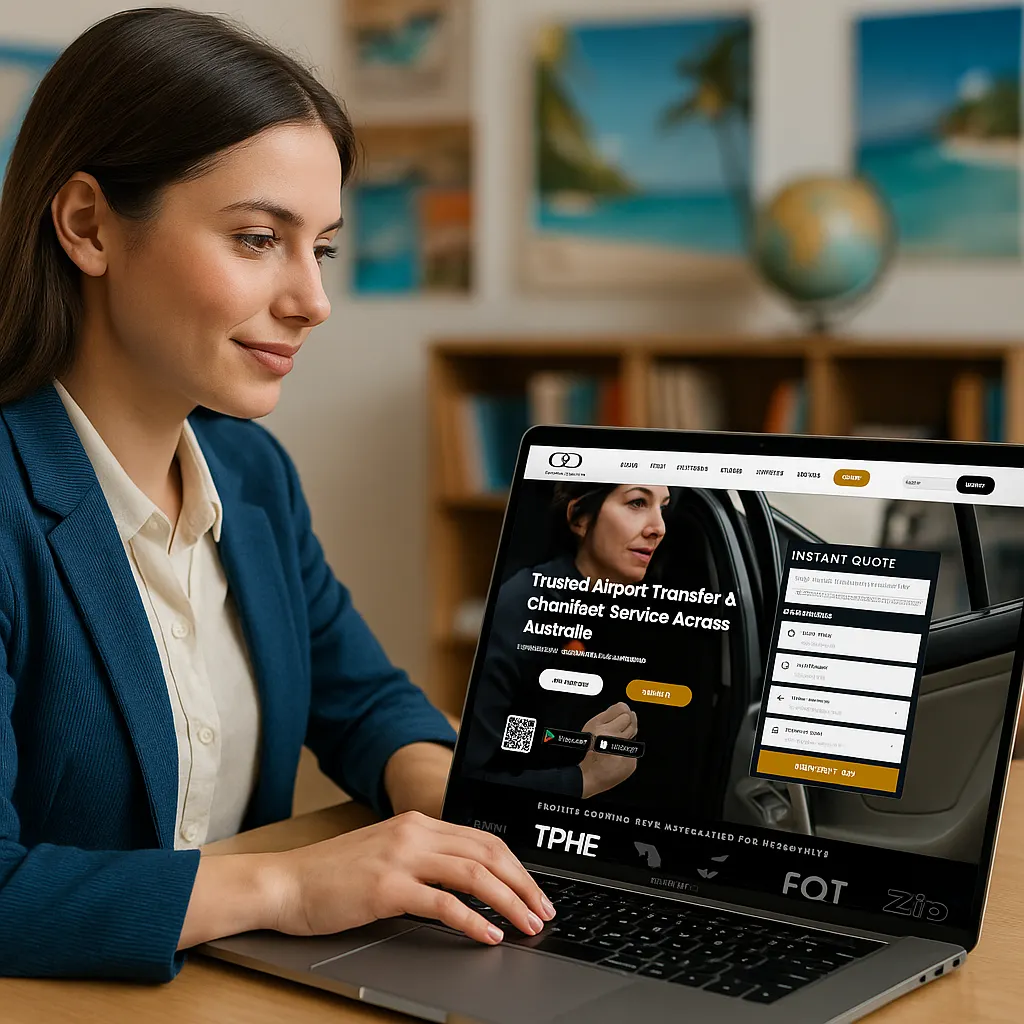
Uber vs. Chauffeur: Why Australian Corporate Travel Is Shifting to Private Airport Transfers



Save $50 on Your First Ride with Cars On Demand.

Who would you prefer to get you to the airport
Who would you prefer to get you to the airport
This is not a story about luxury. It is a story about risk, reliability, and the real cost of a 4:30am cancellation.
Key Takeaways
- Rideshare reliability has structurally weakened for time-critical corporate travel, particularly for early-morning airport transfers, late-night arrivals, and during weather or demand surges.
- Fixed-price chauffeur services are now often cheaper than Uber during surge events — and dramatically cheaper than the cost of a missed flight or a delayed executive meeting.
- Corporate Australia is consolidating around pre-booked, professionally managed airport transfers with full GST-compliant invoicing, flight tracking, and duty-of-care compliance.
What Is Driving the Shift Away From Uber for Corporate Airport Transfers?
Every business traveller has a version of the same story.
The Uber is booked the night before. The 4am alarm goes off. The app is opened. The driver is assigned. Then the driver cancels. Then the next driver cancels. Then the price climbs because surge pricing has activated in the suburb. By the time a car finally arrives, the executive is already running late for a 6am flight that took weeks of calendar work to coordinate.
This is not an edge case. It is the structural weakness of the gig-economy model applied to time-critical travel — and it is the single biggest reason corporate airport transfers in Australia are migrating back to professional chauffeur operators.
A rideshare driver is an independent contractor with no contractual obligation to complete your trip. They can — and do — cancel at the moment of pickup if a more profitable fare appears, if traffic looks unfavourable, or if the destination does not suit them. The platform has no enforcement mechanism that protects you. Your only recourse is to open the app again and start over.
A professional chauffeur service operates on a fundamentally different model. The car is dispatched. The driver is allocated. The job is contracted. If anything changes, the operations team handles it — not you, not at 4:30am, not while you are trying to make a flight. This is the single biggest reason corporate travellers are migrating to pre-booked Cars on Demand airport transfers. Not the leather seats. The certainty.
How Much Does Uber Surge Pricing Really Cost on Corporate Trips?
The economics of rideshare were sold to corporate travel managers on a single premise: you pay only for what you use, and the market sets a fair price.
That premise breaks down at exactly the moment a corporate traveller needs it to work.
A storm rolls in. A flight bank lands. A concert ends. A school holiday begins. Demand spikes, supply tightens, and the fare on the app jumps to 1.8x, 2.3x, 3.2x of the base rate. The executive standing in the rain outside Sydney Airport at 9pm on a Friday is not getting a “market price.” They are paying a penalty for the platform’s inability to forecast demand.
There are also reports across multiple Australian airports of drivers actively manipulating the surge by accepting and cancelling rides to push the displayed price higher. Whether this is platform-tolerated or platform-blind is beside the point. The corporate traveller foots the bill either way.
A pre-booked airport limo service operates on fixed pricing. The quote is the price. No surge. No weather premium. No “high demand” multiplier. This is why finance teams reviewing 12 months of corporate travel data are increasingly finding that the professional chauffeur service Australia offers is not more expensive — it is simply more predictable. And predictable is what budgets are built on.
Why Chauffeur Services Look More Professional Than Uber for Client Pickups
You can spend a year using rideshare for business travel and never notice the small things. Then you take one ride with a professional chauffeur and the differences become impossible to unsee.
The driver is already at the airport meeting point when you land, not still ten minutes away in the rideshare holding zone. Your name is on a board. The car is clean inside and out. The driver helps with your luggage without being asked. The conversation is professional or absent, depending on what you need. The route is the one a local would take, not the one the app suggested.
These are not luxuries. They are the baseline standards of a professional executive car service. Once a senior executive has experienced them as part of an integrated travel day — flight, transfer, meeting, transfer, flight — going back to the rideshare model feels like a step backwards in operational discipline, not just comfort.
The professional difference is most visible at the moments rideshare is weakest: late-night arrivals, international long-haul, regional pickups, multi-stop itineraries, group bookings, and any scenario involving children, elderly passengers, or significant luggage. These are the moments where the rideshare model was never designed to win. They are also the moments that define the actual experience of corporate travel.
Why Chauffeur Services Are Easier for Corporate Expense Management Than Uber
If you have ever managed expense reconciliation for a senior executive who uses rideshare for business travel, you already know this section.
The receipt arrives by email. It shows the fare, the pickup, the drop-off, and a generous tip. It does not show: the booking reference, a consistent GST breakdown, a uniform invoice format, a billing code, a cost-centre tag, or any of the structured information a corporate expense system actually needs.
For one executive on one trip, this is manageable. For an entire C-suite across 200 trips a year, it is an administrative liability. EAs and finance teams spend hours per month chasing missing receipts, manually re-formatting them, reconciling them against credit card statements, and explaining to auditors why ground transport is the messiest line item in the entire travel ledger.
A professional corporate limo service like Cars on Demand issues fully GST-compliant invoices on a centralised account, with cost-centre coding, departmental tagging, and consolidated monthly billing. The EA books once. The finance team receives one structured invoice. The auditor has a clean record. Nobody is chasing a $63.20 charge from “Uber AU Tuesday 6:14am” on a corporate card statement six weeks after the trip.
Is Uber Safe Enough for Corporate Travel? What Duty of Care Actually Requires
In February 2026, the NSW Point to Point Transport Commissioner released updated Women’s Safety Industry Guidelines for rideshare, taxi, and hire vehicle operators. The guidelines are a clear acknowledgment that passenger safety in the gig-economy model has been inconsistent enough to require regulatory intervention.
For a corporate travel program, this is a meaningful signal. Your duty of care to employees — particularly female executives, junior staff travelling alone, and passengers flying late at night or to unfamiliar destinations — does not end when they leave the airport. It ends when they reach their hotel or home, safely, in a vehicle driven by a professional whose identity and conduct your provider can vouch for.
A professional chauffeur is a vetted, accredited employee. Their identification is verified. Their driving record is checked. Their conduct is governed by the standards of the operator and the expectations of the corporate client. If something goes wrong, there is a real chain of accountability — an operations team, a phone line, a manager, a duty-of-care framework.
A rideshare driver is a contractor whose accreditation, vehicle condition, and personal conduct have been vetted by an algorithm and a star rating. When something goes wrong, the recourse runs through an in-app support workflow that was not built for the corporate context.
This is not a hypothetical concern. It is one of the most consistent reasons EAs in Australia cite when they explain why they no longer book rideshare for their executive — and certainly not for an executive’s family member, a visiting client, or a junior team member travelling alone.
What Does an Airport Transfer Say About Your Company to a Client?
There is one final reason corporate travellers are moving away from Uber for airport transfers, and it is the one nobody talks about at the leadership table — but everybody notices when it happens.
When you arrive to collect a major client from Sydney Airport in an unwashed Toyota Camry with a phone holder stuck to the dashboard and a half-empty water bottle in the cupholder, you are communicating something about your company. Whether you intended to or not.
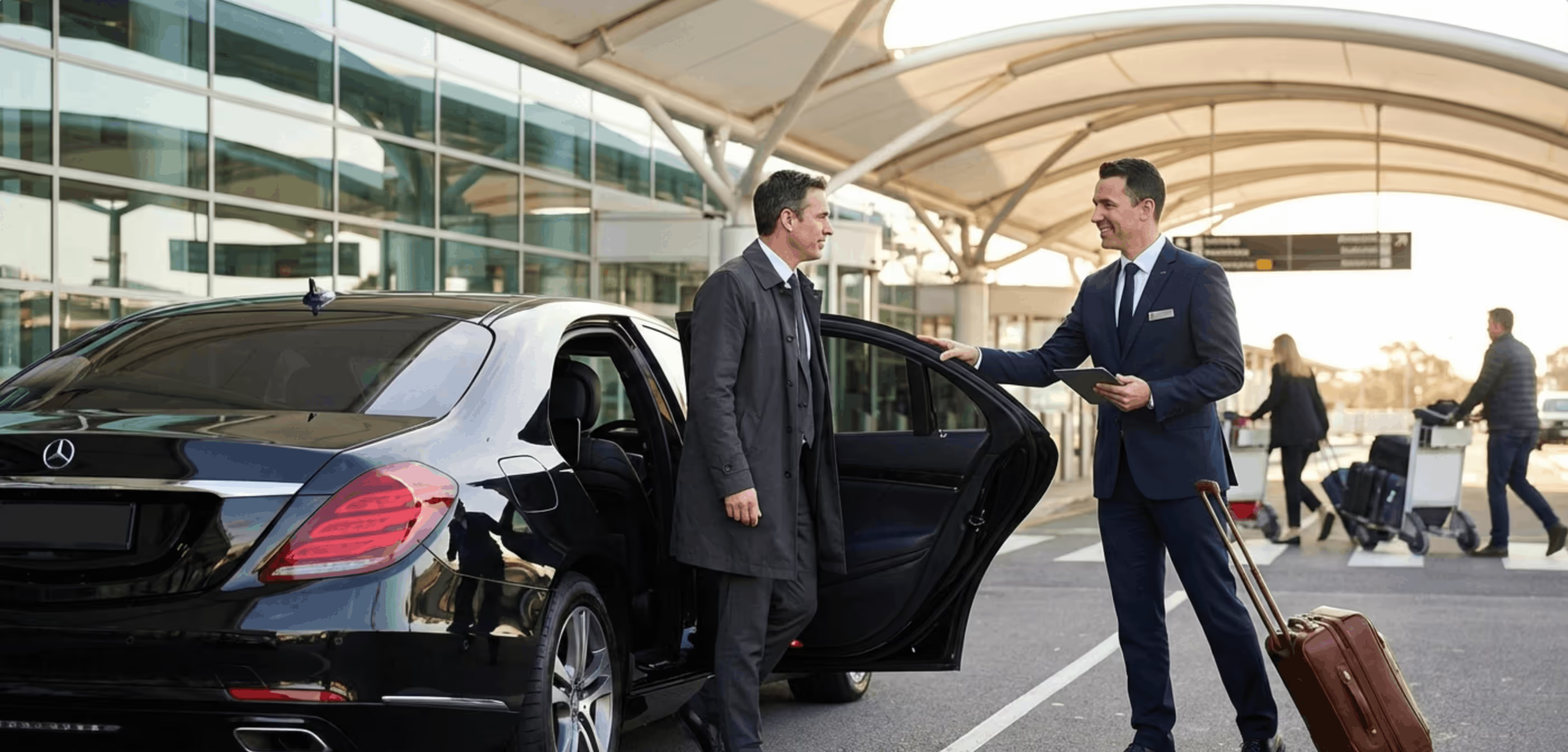
When you arrive in a black Mercedes-Benz E-Class or S-Class, driven by a uniformed professional who greets the client by name, takes their luggage, and opens the door — you are communicating something different. Also whether you intended to or not.
This is not about ostentation. It is about congruence. A company that invests in its people, its strategy, and its outcomes communicates that investment in the smallest details of how it shows up. Ground transport is one of those details. It is the first physical experience a client has of doing business with you, and the last impression they take with them when they leave. Treat it as marginal, and it will be marginal. Treat it as part of the operation, and it becomes part of the operation.
This is why our customers — across legal, financial services, consulting, and corporate Australia — book a professional airport limo service for their executives and their executives’ guests as a matter of standard practice.
Uber vs. Cars on Demand: The Corporate Comparison Table
Australia’s premium compare the two servicesIn 2026, Cars on Demand since 1990 — is seeing a structural shift in how senior executives, EAs, and corporate travel managers book ground transport. After a decade in which rideshare was the default for corporate airport transfers, the most experienced bookers in the country are quietly moving back to professional chauffeur services for the trips that actually matter.
Service Areas: Where Cars on Demand Operates
Cars on Demand provides professional corporate airport transfers and executive chauffeur services across every major Australian city, with dedicated landing pages and local fleet capacity in each:
- Sydney airport transfers — including dedicated Sydney airport limo service
- Melbourne airport transfers
- Brisbane airport transfers
- Perth airport transfers
- Adelaide airport transfers
- Canberra airport transfers
- Gold Coast airport transfers
- Sunshine Coast airport transfers
- Cairns airport transfers
- Darwin airport transfers
The Technology That Closes the Operational Gap
Part of what has made the professional chauffeur model genuinely competitive — not just for comfort, but for operational performance — is what has happened behind the scenes.
The dispatch technology underpinning Cars on Demand is built on the RideMinder platform, the same enterprise-grade system that powers many of the world’s leading chauffeur operators. It provides real-time GPS tracking on every booking, automatic flight monitoring on every airport arrival and departure, and proactive communication from the moment a booking is confirmed through to the moment the passenger reaches their destination.
A flight that lands forty minutes early gets met by a driver who has already adjusted. A flight delayed by two hours does not result in a charge for waiting time the passenger had no control over. An EA tracking an executive’s transfer can see exactly where the car is, exactly when it will arrive, and exactly when their executive will reach their next meeting.
You can read more about how the technology that powers Cars on Demand closes the operational gap that rideshare has historically exposed.
FAQ: What Corporate Travellers Ask Before Switching
How much more does a chauffeur service cost compared to Uber for airport transfers?
On a like-for-like trip without surge, a professional chauffeur service is typically 15–25% more than a baseline Uber fare. During surge events — which is precisely when corporate travellers most need certainty — the chauffeur service is often the cheaper option outright. Across a 12-month corporate account, the total cost difference is usually far smaller than expected, and the cost of failure is dramatically lower.
Can I book a chauffeur service at short notice for an airport transfer?
Yes. Cars on Demand operates 24 hours a day across Australia and accepts same-day bookings subject to vehicle availability. For executive travel, however, we strongly recommend pre-booking — both because it guarantees availability and because it locks in the fixed price before any potential demand surge.
Is a chauffeur service better than a regular taxi for airport runs?
A professional chauffeur is a different category of service entirely. Vetted drivers, premium vehicles, fixed pricing, meet-and-greet at the airport meeting point, flight tracking, consolidated invoicing, and 24/7 dispatch support — none of which a metered taxi offers. For occasional non-critical trips a taxi works fine. For corporate or executive travel, the chauffeur model is built for the job.
Do you offer corporate accounts for businesses that book multiple executives?
Yes. Our executive assistant platform was built specifically for EAs, travel managers, and corporate accounts managing high volumes of bookings. One account, consolidated invoicing, cost-centre tagging, and full visibility across every booking in your organisation.
What kind of vehicles do you operate?
Our fleet is built around Mercedes-Benz E-Class and S-Class sedans for executive travel, Mercedes V-Class people movers for groups and families, and specialist vehicles for medical, accessibility, and large-group requirements. Every vehicle is presented to the same standard on every booking.
Can you handle pickups for clients flying into Australia from overseas?
Yes — this is one of our most-requested services. We track international tail numbers, meet your client inside the arrivals hall with a name board, assist with luggage, and deliver them to their hotel, meeting, or destination without a moment of uncertainty.
How does flight tracking actually work?
When you provide your flight number at the time of booking, our dispatch system automatically monitors that flight in real time. If your aircraft is delayed, your driver’s schedule adjusts. If it lands early, your driver is notified to arrive earlier. You walk out of the terminal and your car is there — every time.
What if my flight is cancelled or significantly delayed?
Our cancellation policy allows free cancellation up to four hours before pickup. For flight cancellations within that window, our 24/7 operations team works directly with you to reschedule the transfer to your new flight at no penalty.
The New Standard for Corporate Ground Transport
The migration is not loud. It is not branded. It is not marketed.
It is just happening — quietly, steadily, account by account — as Australian businesses come to the same conclusion that the most experienced EAs reached years ago: the cheapest ground transport option is not the lowest-risk option, and the lowest-risk option is the only one worth booking for a trip that matters.
Cars on Demand has been operating premium chauffeur and airport transfer services across Australia since 1990. Thirty-five years of corporate accounts, executive transfers, late-night arrivals, last-minute reschedules, and the operational discipline that turns ground transport from a variable into a constant.
If your travel program is still defaulting to rideshare for executive airport transfers, it may be time to do what the rest of the market is quietly doing.
Book Your Next Corporate Airport Transfer
Executive Assistants: Register your corporate account today and see how centralised billing, fixed pricing, and consolidated invoicing can save you 3+ hours of reconciliation per month — while giving your executive a transfer that simply never fails.
Register here | Call 1300 638 258 | Email admin@carsondemand.com.au
New to Cars on Demand? Claim $50 off your first airport transfer.
.avif)
Get a quote in 8 seconds